- This topic is empty.
-
AuthorPosts
-
2026-11-16 at 2:19 pm #30476
A super austenitic 254SMO plate is designed for industrial environments where conventional stainless steels may suffer from pitting, crevice corrosion, or chloride-induced damage. Commonly associated with demanding applications in seawater systems, chemical processing, desalination, and pollution control, 254SMO is a high-alloy austenitic stainless steel developed to provide strong resistance to localized corrosion in chloride-rich environments. Its performance comes from a carefully balanced composition containing high levels of chromium, molybdenum, and nitrogen.
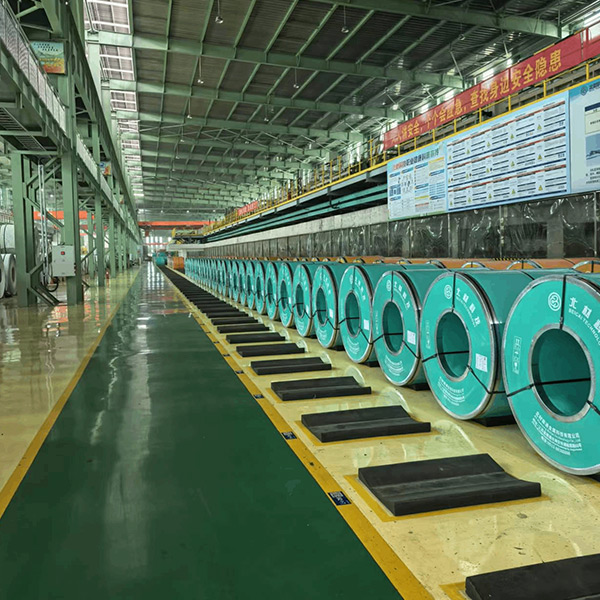
Selecting 254SMO plate is not simply a matter of choosing a premium stainless steel grade. Actual service life depends on chloride concentration, temperature, oxidizing conditions, crevice geometry, surface condition, fabrication quality, and mechanical loading. Understanding these variables helps determine whether 254SMO is appropriate for the application and how to specify the plate for dependable long-term performance.
What Makes 254SMO Different from Conventional Stainless Steel?
254SMO, commonly designated UNS S31254 and also known as 6Mo stainless steel, belongs to the super austenitic stainless steel family. Compared with common 304 and 316L stainless steels, it contains substantially more molybdenum and typically more chromium, along with nitrogen additions that contribute to strength and localized corrosion resistance.
A typical nominal composition includes approximately 20% chromium, 18% nickel, 6% molybdenum, and 0.2% nitrogen, with exact limits governed by the applicable material specification. These alloying elements work together rather than independently. Chromium supports passivation, molybdenum improves resistance to pitting and crevice corrosion, and nitrogen contributes to both corrosion resistance and mechanical strength.
The alloy's high pitting resistance is often expressed using the Pitting Resistance Equivalent Number (PREN). A commonly used relationship is PREN = %Cr + 3.3 × %Mo + 16 × %N, although alternative formulas exist. Based on typical 254SMO chemistry, its PREN is generally above 40. This is a useful comparative indicator, not a guarantee of performance in every environment. Real corrosion behavior must still be assessed against the actual medium, temperature, surface finish, and exposure conditions.
Key Applications for Super Austenitic 254SMO Plate
Seawater and desalination systems
Seawater contains chlorides that can initiate pitting and crevice corrosion, particularly at elevated temperatures or in stagnant areas. In desalination plants, heat exchangers, seawater piping components, and related equipment may experience concentrated salts, deposits, and complex temperature conditions. Under appropriately assessed conditions, 254SMO plate can provide a corrosion-resistant material option for components exposed to these environments.
However, alloy selection should account for the full process rather than chloride concentration alone. Flow velocity, oxygen content, deposits, gasket interfaces, weld geometry, and cleaning procedures can all affect localized corrosion. Where seawater conditions are especially aggressive, the material should be evaluated against relevant service data and project-specific corrosion requirements.
Chemical processing equipment
Chemical processing facilities often handle solutions containing chlorides, acids, or mixed chemical species. Conventional stainless steels may be unsuitable where localized corrosion develops around joints, deposits, or stagnant zones. The high molybdenum content of 254SMO makes it a candidate for selected process equipment, tanks, vessels, and heat-transfer components.
Its suitability is not universal across all acids or chemicals. Concentration, temperature, impurities, and redox conditions can significantly change corrosion behavior. Before specifying a 254SMO plate for a chemical vessel or process line, verify compatibility with the exact medium and operating envelope.
Pollution control and industrial water treatment
Flue-gas cleaning systems, industrial wastewater treatment equipment, and other pollution-control installations can expose metal surfaces to chloride-bearing liquids and corrosive deposits. 254SMO may be considered where resistance to localized corrosion is a priority and where the equipment design requires a high-alloy stainless steel plate.
In these applications, the corrosion assessment should include start-up and shutdown conditions, cleaning chemicals, liquid concentration changes, and potential deposits. Intermittent exposure can create conditions different from those encountered during steady-state operation.
Plate Thickness, Dimensions, and Mechanical Requirements
Choosing the correct 254SMO plate involves more than confirming the grade. Thickness, width, length, flatness, and dimensional tolerances must match the equipment design, fabrication method, and applicable material standard. Pressure-containing components may require calculations under the governing design code, while structural or wear-related components may have different acceptance criteria.
Because 254SMO is a highly alloyed material, its mechanical properties and fabrication behavior should be verified from the relevant product specification and mill documentation. Do not assume that a value for one thickness range or delivery condition applies to every plate. The specified minimum yield strength, tensile strength, elongation, and impact requirements, where applicable, should be confirmed for the supplied product.
Corrosion resistance and structural performance must be considered together. A plate that satisfies chemical requirements but does not meet the design thickness or mechanical requirements cannot be treated as a suitable replacement. Likewise, using a thicker plate does not eliminate the need to verify corrosion compatibility and fabrication quality.
Fabrication, Welding, and Surface Condition
254SMO requires appropriate fabrication controls to preserve its corrosion-resistant properties. Welding procedures should be selected for the specific base material, joint design, thickness, and service conditions. Suitable filler metal selection, heat input control, interpass temperature management, and post-weld cleaning are important considerations. The exact procedure should be established through qualified welding documentation rather than generalized assumptions.
Contamination is another concern. Carbon-steel particles transferred from tools, worktables, or handling equipment can compromise the surface and create sites where corrosion may initiate. Fabrication areas and tools should therefore be managed to minimize cross-contamination, particularly when high-alloy stainless steel is processed alongside carbon steel.
Surface condition also influences performance. Rough surfaces, embedded particles, heat tint, and deposits may affect corrosion behavior in chloride-rich environments. Appropriate cleaning, pickling, or passivation procedures should be determined according to the material, fabrication process, and project requirements. A smooth surface alone does not guarantee immunity to pitting, but good surface preparation helps the alloy perform as intended.
Quality Verification When Purchasing 254SMO Plate
Reliable material selection depends on traceable specifications and verifiable inspection records. The purchase specification should identify the grade, applicable product standard, dimensions, delivery condition, surface requirements, and any supplementary testing or documentation.
Material Test Certificates should be reviewed to confirm chemical composition and mechanical properties against the specified requirements. Positive Material Identification (PMI) may be appropriate for projects where alloy identity must be verified during receiving or fabrication. PMI can help identify alloy composition, but it does not replace a complete material certificate or all required mechanical and corrosion testing.
Additional requirements may include ultrasonic testing, dimensional inspection, surface examination, or project-specific acceptance criteria. These should be agreed before production and documented clearly. For critical service, it is also important to preserve heat-number traceability during cutting, forming, welding, and assembly so that the material can be linked to its original inspection records.
Is 254SMO Better Than 316L or Duplex Stainless Steel?
The appropriate comparison depends on the service environment and project priorities. 316L is widely used for general corrosion resistance and can be an economical option where chloride exposure and temperature are moderate. In more aggressive chloride environments, 254SMO's higher molybdenum content and nitrogen addition can provide stronger resistance to localized corrosion.
Duplex stainless steels offer a different combination of properties, often including high strength and good chloride-related corrosion resistance. The exact comparison depends on the duplex grade, fabrication requirements, temperature, and exposure conditions. Neither 254SMO nor duplex stainless steel is automatically the best choice for every project.
A lifecycle assessment should compare initial material cost with expected service life, inspection frequency, repair access, replacement downtime, and the consequences of failure. Where corrosion-related shutdowns are expensive, a higher-alloy plate may be justified. In less demanding conditions, a lower-cost grade may meet the design requirements without unnecessary material expenditure.
Sourcing Super Austenitic 254SMO Plate from Yimo Alloy Tech
Yimo Alloy Tech integrates material supply with specialized manufacturing capabilities, focusing on stainless steel clad plates, stainless steel, and special metal materials. Its operations include a dedicated clad plate manufacturing base with rolling and cladding processes, supported by supply-chain partnerships for stainless steel products and related materials.
For projects involving super austenitic 254SMO plate, technical confirmation should focus on the availability of the specified grade, thickness and dimensional range, applicable standards, delivery condition, and required inspection documentation. If the project calls for a stainless steel clad plate rather than solid 254SMO plate, the cladding material, base material, bonding process, total thickness, and bond-quality acceptance criteria must be defined separately. Solid plate and clad plate are different product configurations and should not be treated as interchangeable without engineering review.
Providing the intended service medium, operating temperature, design pressure, required dimensions, fabrication method, and certification requirements at the inquiry stage helps establish a clear technical basis for supply. Yimo Alloy Tech's combination of material sourcing, composite processing capability, and international trade experience can support customized material procurement, subject to confirmation of the exact grade and product configuration.
Conclusion
A super austenitic 254SMO plate is a strong candidate for selected applications involving aggressive chloride exposure and demanding corrosion-control requirements. Its high chromium, molybdenum, and nitrogen content supports resistance to pitting and crevice corrosion, but actual performance still depends on process conditions, fabrication quality, surface preparation, and correct material verification.
The most reliable procurement approach combines a precise material specification with traceable certificates, suitable inspection requirements, and application-specific corrosion assessment. By confirming these details before production, industrial projects can reduce material-selection risks and make better-informed decisions about long-term reliability and lifecycle cost.
http://www.yimoalloy.com
Yimo Alloy Tech -
AuthorPosts

- You must be logged in to reply to this topic.