- This topic is empty.
-
AuthorPosts
-
2026-11-16 at 2:19 pm #30473
Plate and frame filter paper plays an important role in industrial solid-liquid separation, where filtration efficiency, filtrate clarity, and operating consistency directly affect production quality and maintenance costs. Selecting the right plate and frame filter paper requires more than matching the paper to a filter press or frame size. The filter medium must also suit the suspended particles, liquid properties, operating pressure, required filtration accuracy, and acceptable flow rate. A paper that retains particles effectively but restricts flow too much can extend batch cycles, while one with insufficient retention may allow contaminants to pass into the filtrate.
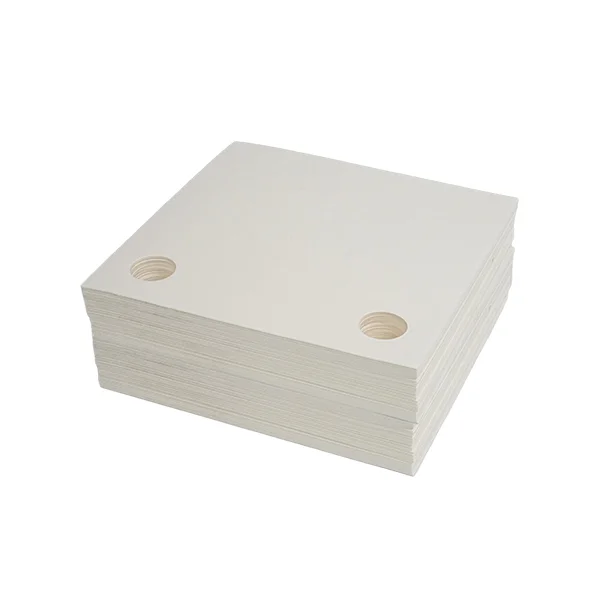
For industrial applications, the most reliable selection process begins with the actual filtration objective and the operating conditions. Understanding how filter paper structure, permeability, particle retention, wet strength, and chemical compatibility interact helps manufacturers achieve repeatable results without unnecessary filter media consumption or production interruptions.
How Plate and Frame Filter Paper Works in Industrial Filtration
Plate and frame filtration uses a series of plates and frames to support the filter medium and create chambers through which liquid passes. As the liquid enters the filtration system, suspended solids are retained by the filter paper or accumulate on its surface, while the clarified liquid moves through the drainage channels and exits the equipment.
The filter paper serves as both a particle-retention medium and a critical component of the overall flow path. Its performance depends on fiber composition, pore structure, thickness, basis weight, and resistance to the pressure and liquid conditions encountered during operation. These characteristics influence initial flow rate, filtrate clarity, solids retention, and the rate at which the medium becomes blocked.
In applications involving fine particles, a tighter filter structure may improve retention but increase flow resistance. In processes with higher solids loading, a more permeable medium may support longer filtration cycles, provided that it still achieves the required filtrate quality. The best choice is therefore not necessarily the paper with the smallest pores or the highest nominal retention. It is the grade that provides an appropriate balance between separation efficiency, throughput, and operating cost.
Key Performance Factors When Choosing Filter Paper
Filtration efficiency and particle retention
Particle retention is one of the first properties to evaluate when selecting plate and frame filter paper. The required filtration grade depends on the size distribution of suspended solids and the acceptable level of residual particles in the filtrate. For example, preliminary filtration of relatively coarse contaminants may favor a more open structure, while fine filtration of process liquids may require a denser fiber network.
Nominal retention ratings should be interpreted carefully. Actual results can vary with particle shape, particle concentration, liquid viscosity, pressure differential, and the formation of a filter cake. If the process requires a defined filtrate clarity, testing the paper with the actual liquid and representative solids is more reliable than selecting a grade based on a single specification.
Permeability and filtration throughput
Permeability determines how readily liquid passes through the filter medium under a given pressure differential. Higher permeability can help shorten filtration cycles, but it does not automatically mean better overall performance. A paper with excessive permeability may allow unwanted particles to pass, whereas an overly dense grade may cause slow flow and premature pressure buildup.
The relationship between permeability and retention should be assessed under realistic process conditions. Liquid viscosity is particularly important: oils and other viscous liquids can flow substantially more slowly than water through the same filter medium. Temperature can also change viscosity and therefore alter filtration behavior. When evaluating paper for oil filtration, both the operating temperature and the oil's viscosity range should be considered.
Wet strength and dimensional stability
Filter paper must maintain its integrity while exposed to liquid, pressure, and mechanical handling. Insufficient wet strength can cause tearing, deformation, leakage around the frame, or contamination of the filtrate by fibers. Dimensional stability is equally important because the paper must cover the effective filtration area and seal correctly within the equipment.
The required strength depends on the application and the operating pressure. A grade suitable for low-pressure laboratory or general-purpose filtration may not be appropriate for a demanding industrial process. Before production use, verify the manufacturer's available wet-strength data and confirm that the material is compatible with the equipment's operating conditions.
Chemical compatibility and cleanliness
The filter medium must remain stable in contact with the process liquid. Acidity, alkalinity, solvents, oils, and other chemical constituents can affect fiber stability, extractables, and filtration performance. For food-related applications, material suitability and cleanliness requirements must also be considered in relation to the intended process and applicable regulations.
A filter paper described as suitable for food-grade use should not automatically be assumed compliant with every food-contact requirement. The intended application, relevant documentation, and applicable market regulations should be confirmed before use. For sensitive processes, it may also be necessary to evaluate extractables, odor transfer, or other product-specific cleanliness concerns.
Matching Filter Paper to Different Applications
Industrial oil filtration is a common application for plate and frame filter paper. The medium may be used to remove suspended particles from lubricating oils, process oils, or other industrial liquids. In these systems, the main selection challenge is balancing particle removal with acceptable flow under the liquid's actual viscosity and temperature conditions. If the paper blocks too quickly, filtration cycles become longer and replacement frequency increases. If retention is inadequate, residual contaminants can affect downstream equipment or product quality.
Chemical and general industrial filtration require particular attention to liquid compatibility and solids characteristics. Some processes involve fine precipitates, variable particle concentrations, or changes in liquid composition between batches. A suitable filter paper should provide consistent performance across the expected operating range rather than only under ideal laboratory conditions.
Food-processing applications place additional emphasis on cleanliness, traceability, and the suitability of the filter medium for its intended contact conditions. Depending on the process, the paper may be used for clarification or removal of suspended matter from liquids. Material documentation and process validation should be considered alongside filtration efficiency and flow rate.
Qualitative and quantitative analytical filter papers serve a different purpose from many industrial filtration grades. They are designed for laboratory procedures where sample handling, residue analysis, and consistency are important. Although some material characteristics overlap, analytical filter paper should not be treated as interchangeable with industrial grades without verifying the required performance and application suitability.
Why Equipment Compatibility Matters
Even a high-quality filter paper can perform poorly if its dimensions or handling characteristics do not match the filtration equipment. The paper must cover the required filtration area, fit the plate and frame arrangement, and form an effective seal without excessive folding or wrinkling. Incorrect dimensions can lead to bypass leakage, uneven flow distribution, and inconsistent results.
Before ordering, confirm the required length, width, thickness, and any equipment-specific requirements. Also consider how the paper will be installed and replaced. In continuous or high-frequency batch operations, consistent dimensions and dependable sheet quality help reduce installation errors and unplanned downtime.
Operating pressure should be evaluated together with the filter press design and the properties of the filter medium. Increasing pressure may initially improve throughput, but it can also accelerate cake formation, compress certain solids, or place additional stress on the paper. Operating conditions should remain within the limits established for the complete filtration system.
How to Evaluate Filter Paper Before Bulk Purchasing
A practical evaluation should use the actual process liquid whenever possible. Record the initial flow behavior, filtration time, pressure differential, filtrate clarity, and the amount of solids retained. Observe whether the paper tears, deforms, leaks at the edges, or becomes blocked prematurely. For repeatability, conduct multiple trials under comparable conditions instead of relying on a single successful test.
The evaluation should also consider total operating cost rather than unit price alone. A lower-priced grade may require more frequent replacement or longer cycle times. Conversely, a more expensive paper may not provide meaningful benefits if the process does not require its additional retention capability. Comparing cost per batch, replacement frequency, downtime, and filtrate quality provides a more useful basis for selection.
For customized requirements, communicate the process liquid, target filtration result, operating temperature, pressure conditions, suspended-solid characteristics, and equipment dimensions to the filter paper manufacturer. This information helps narrow down suitable grades and establishes a clearer basis for sample testing and subsequent quality control.
Plate and Frame Filter Paper from Nantong Tianjiao Filtration Materials
Founded on August 10, 1992, Nantong Tianjiao Filtration Materials Co., Ltd. has developed its expertise in filtration materials through continued product research, process improvement, and equipment upgrades. Formerly known as Haian Precision Filter Paper Factory, the company manufactures food-grade filter paper, qualitative and quantitative analytical filter paper, industrial oil filter paper, and related filtration products.
Its product range supports applications with different requirements for filtration performance and material suitability. Customization can help address variations in liquid properties, equipment dimensions, and process objectives. The company also has experience serving industrial customers and exporting products to markets across Europe, America, and Southeast Asia.
When evaluating a plate and frame filter paper supplier, manufacturing experience is only one consideration. Consistent product specifications, reliable batch quality, appropriate technical communication, and the ability to provide samples for process verification are equally important. Clear agreement on grade, dimensions, inspection criteria, and packaging requirements helps reduce variation between orders and supports stable long-term operation.
Conclusion
Choosing the right plate and frame filter paper requires a balanced assessment of particle retention, permeability, wet strength, chemical compatibility, and equipment fit. The optimal grade depends on the actual liquid, solids loading, operating conditions, and required filtration result—not simply on paper thickness or price.
By validating candidate grades under representative conditions and comparing filtration performance with total operating cost, manufacturers can reduce avoidable downtime, improve filtrate consistency, and establish a more reliable filtration process. Working with an experienced manufacturer such as Nantong Tianjiao Filtration Materials Co., Ltd. can support this process through product selection, customized requirements, and consistent supply of filtration materials.
http://www.tianjiaofilter.com
Nantong Tianjiao Filtration Materials Co., Ltd. -
AuthorPosts

- You must be logged in to reply to this topic.