- This topic is empty.
-
AuthorPosts
-
2026-11-16 at 2:19 pm #30474
Choosing the right 1.75mm TPU filament requires more than evaluating flexibility or Shore hardness. For 3D printing applications involving protective cases, wearable accessories, flexible connectors, seals, vibration-damping components, and customized functional parts, filament consistency directly affects extrusion stability, dimensional accuracy, layer adhesion, and finished-part performance. Even small variations in filament diameter, moisture content, or material formulation can cause inconsistent feeding, extrusion fluctuations, and printing defects.
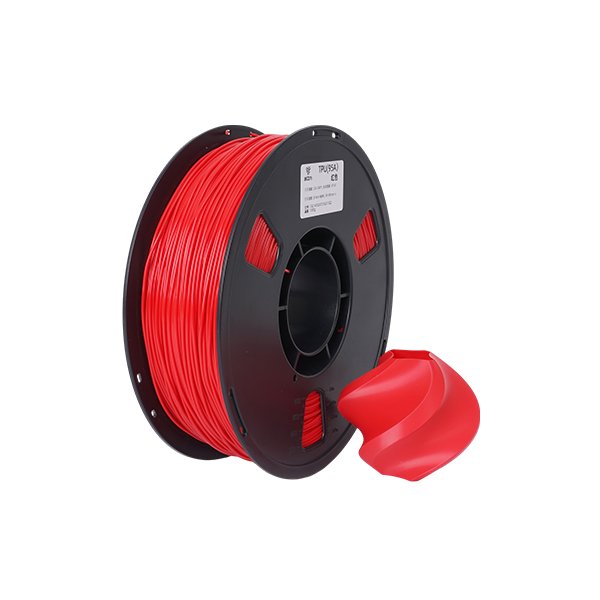
As flexible 3D printing becomes increasingly common in functional prototyping and end-use component production, TPU (Thermoplastic Polyurethane) has become an important material option. Its combination of elasticity, abrasion resistance, impact resistance, and chemical resistance makes it suitable for applications where conventional rigid materials cannot provide the required mechanical behavior. However, TPU is more sensitive to printing conditions than PLA or PETG, making filament quality and material consistency particularly important.
Why 1.75mm TPU Filament Is Widely Used in 3D Printing
The 1.75mm diameter specification is widely adopted by desktop and professional FDM/FFF 3D printers. It offers compatibility with a broad range of extrusion systems, including direct-drive and Bowden configurations, although flexible TPU generally performs more reliably with direct-drive extruders.
TPU belongs to the thermoplastic elastomer family and combines elastic deformation with thermoplastic processing characteristics. Unlike rigid PLA, TPU can bend, compress, and recover its shape under suitable loading conditions. This makes it useful for producing parts that require repeated deformation without immediate fracture.
Typical applications include smartphone protective cases, shoe components, flexible tubing prototypes, gaskets, protective covers, automotive interior accessories, and industrial cushioning components. The required material properties vary significantly between these applications. A protective case may prioritize impact absorption and surface flexibility, while a gasket may require controlled compression recovery and dimensional stability.
For this reason, selecting 1.75mm TPU filament should involve evaluating both its printing characteristics and the mechanical requirements of the finished part.
Shore Hardness and Mechanical Properties
Shore hardness is one of the most important specifications when comparing TPU filament products. It indicates resistance to indentation and provides a practical reference for material stiffness. TPU filament is commonly available in different hardness grades, often expressed using Shore A measurements.
Softer TPU grades generally provide greater flexibility and deformation capability, making them suitable for highly flexible accessories and cushioning components. However, their lower stiffness can make filament feeding more difficult, particularly in Bowden extrusion systems. Softer materials may buckle or compress inside long feeding paths if the extruder does not provide sufficient guidance.
Harder TPU grades offer greater structural support and are often easier to feed through the extrusion system. They can be more appropriate for functional parts that need a balance between flexibility and shape retention.
Shore hardness should not be evaluated independently of tensile strength, elongation at break, tear resistance, and compression behavior. Two TPU filaments with similar hardness ratings may produce different mechanical results because of differences in polymer formulation and processing conditions. Manufacturers should therefore provide technical data sheets with clearly identified test methods and material specifications.
Why Diameter Tolerance Matters for 1.75mm TPU Filament
Filament diameter consistency directly influences the amount of material delivered to the hotend. When the actual diameter fluctuates, the printer may experience variations in extrusion volume even when the slicer settings remain unchanged.
For a nominal 1.75mm filament, diameter tolerance is an important quality indicator. A filament with a tolerance of ±0.03mm has a narrower dimensional variation range than one with ±0.05mm or ±0.10mm. Consistent diameter helps maintain predictable extrusion behavior and reduces the need for frequent flow adjustments.
Ovality is another parameter worth checking. A filament may meet its nominal diameter specification in one direction but become noticeably wider or narrower when measured perpendicular to that direction. Excessive ovality can affect feeding through the extruder gears and filament path.
For flexible materials, dimensional accuracy is particularly important because TPU can deform under mechanical pressure. Consistent extrusion geometry helps reduce feeding fluctuations, under-extrusion, and inconsistent surface quality.
A professional 1.75mm TPU filament manufacturer should use continuous diameter monitoring and multiple inspection checkpoints rather than relying exclusively on random measurements taken after production.
Moisture Control and Filament Storage
TPU is hygroscopic, meaning it can absorb moisture from the surrounding environment. Moisture absorption is one of the most common causes of inconsistent TPU printing performance.
When moisture-containing filament enters a heated nozzle, absorbed water can vaporize during extrusion. This may produce popping sounds, bubbles, rough surfaces, stringing, inconsistent extrusion, and reduced surface quality. In severe cases, moisture-related processing problems can also affect the mechanical integrity of printed components.
Proper drying and packaging are therefore essential parts of TPU filament manufacturing. Drying parameters should be matched to the specific TPU formulation because excessive temperature or prolonged exposure can damage the material or alter its processing characteristics.
For end users, a filament dryer or suitable drying equipment can help maintain material performance during printing. After drying, TPU should be stored in moisture-resistant packaging with desiccant. Resealable storage containers are particularly useful for users who frequently switch between different materials.
A manufacturer should also control moisture before extrusion and protect finished filament from humidity during winding, packaging, and transportation.
Printing Temperature, Speed and Extrusion Stability
The recommended printing temperature for TPU depends on the polymer formulation, hardness, pigment system, and printer configuration. Many commercial TPU filaments operate within an approximate nozzle temperature range of 200–240°C, but the manufacturer's technical recommendations should always take priority.
Printing speed is another critical factor. TPU generally benefits from controlled extrusion speeds because its elasticity makes it more sensitive to feeding pressure and filament compression. Depending on hardness and printer design, starting speeds around 20–40 mm/s can provide a practical baseline for tuning.
Direct-drive extruders are often preferred because the shorter distance between the drive gears and hotend reduces the opportunity for flexible filament to buckle. Bowden systems can also process some TPU grades, but they may require slower printing speeds, careful retraction settings, and a well-supported filament path.
Retraction should generally be conservative when printing TPU. Excessive retraction can compress or stretch the filament inside the extruder, resulting in inconsistent feeding and extrusion interruptions. Temperature, flow rate, cooling, and retraction should be adjusted together to achieve stable printing.
How to Evaluate a 1.75mm TPU Filament Manufacturer
For distributors, 3D printing brands, and industrial material buyers, supplier evaluation should extend beyond sample appearance and unit pricing. Manufacturing consistency determines whether different batches can deliver comparable printing results.
Diameter tolerance, ovality, hardness consistency, moisture control, tensile properties, winding quality, and packaging protection should all be included in the quality assessment. Poor winding can create tangles or feeding interruptions even when the filament itself meets dimensional specifications.
Customization is also important for businesses developing their own 3D printing material brands. Relevant options may include Shore hardness, colors, spool weights, packaging design, and customized material formulations. However, any formulation adjustment should be supported by printing trials and mechanical testing to confirm that the modified filament maintains stable extrusion and the required physical properties.
A reliable supplier should also maintain traceability between raw material batches and finished filament production. This makes it easier to investigate quality variations and maintain consistency across repeat orders.
Why Choose FilumCube for 1.75mm TPU Filament
Wuxi Filum Cube Technology Co., Ltd. is a source manufacturer specializing in 3D printing filament production, based in Wuxi, Jiangsu, China. With founding partners experienced in polymer engineering and materials science, the company focuses on controlling the complete manufacturing process, from raw material sourcing to finished filament production.
FilumCube brings more than eight years of R&D experience in the 3D printing materials industry and operates an in-house production chain designed to support consistent material quality and customized requirements. Its product portfolio covers PLA, PETG, ABS, TPU, ASA, PA (Nylon), and PC, with 1.75mm and 3.0mm diameter options.
For 1.75mm TPU filament, dimensional consistency is particularly important. FilumCube maintains diameter tolerance within ±0.03mm and applies more than five quality inspection checkpoints throughout production. These controls help reduce dimensional fluctuations and support stable material feeding during printing.
As a 100% source factory, FilumCube eliminates intermediary trading layers and offers direct factory pricing, typically 10–20% below that of trading companies. Standard 1KG spools and customized spool weights are available, supporting different distribution, retail, and industrial supply requirements.
Conclusion
Selecting high-quality 1.75mm TPU filament requires evaluating dimensional tolerance, Shore hardness, moisture control, mechanical properties, and extrusion stability together. A filament that offers excellent flexibility but inconsistent diameter or excessive moisture can still create significant printing problems. The best material is one that combines the required mechanical performance with predictable processing characteristics across different production batches.
For businesses seeking a long-term filament manufacturing partner, in-house production, material R&D capabilities, measurable quality standards, and flexible customization are important selection criteria. With its integrated manufacturing chain, polymer material expertise, and multi-stage inspection system, FilumCube provides a manufacturing foundation for consistent TPU filament supply and customized 3D printing material solutions.
http://www.filum3d.com
Wuxi Filum Cube Technology Co., Ltd. -
AuthorPosts

- You must be logged in to reply to this topic.