- This topic is empty.
-
AuthorPosts
-
2026-09-07 at 2:52 pm #29790
A road racing motorcycle is engineered to deliver speed, precise handling, rapid acceleration, and reliable braking under demanding riding conditions. Unlike motorcycles used primarily for commuting, a road racing machine may regularly experience high engine speeds, aggressive cornering, repeated hard braking, rapid acceleration, and significant heat buildup. These conditions place additional stress on almost every major component.
That is why motorcycle maintenance should not be treated as something to do only when a problem appears. For riders who regularly participate in track days, racing events, or high-performance riding, preventive care is an essential part of keeping a motorcycle safe, predictable, and competitive.
A well-maintained motorcycle is also easier to control. Proper tire pressure, consistent braking, correctly adjusted suspension, smooth power delivery, and a healthy drivetrain all contribute to a more predictable riding experience.
This complete guide explains the key areas of road racing motorcycle maintenance, from daily inspections and engine care to tires, brakes, suspension, chain maintenance, electrical systems, and long-term storage.
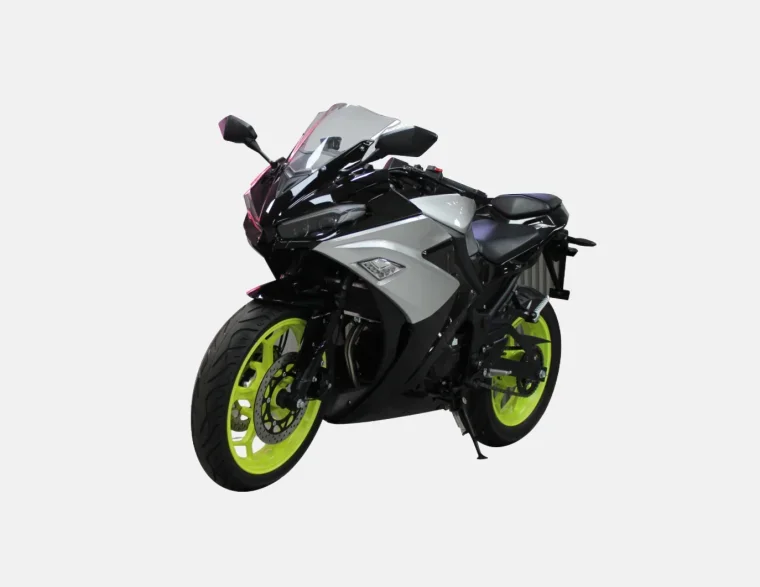
Why Road Racing Motorcycle Maintenance Matters
The demands placed on a racing-oriented motorcycle are significantly different from those placed on a standard street motorcycle.
During a typical track session, the engine may spend a considerable amount of time at high RPM. The brakes can repeatedly convert high-speed motion into heat, while the tires must provide grip during hard acceleration and cornering. Meanwhile, the suspension and chassis continuously manage changes in load.
These conditions can accelerate component wear.
Regular maintenance helps riders:
-
Identify problems before they become serious
-
Maintain consistent motorcycle performance
-
Extend the service life of important components
-
Reduce unexpected downtime
-
Improve braking and handling consistency
-
Protect the engine and drivetrain
-
Improve overall riding confidence
For anyone using a road racing motorcycle for track days, maintenance intervals may need to be more frequent than those recommended for ordinary road use. The exact schedule should always take into account the motorcycle manufacturer's recommendations, riding conditions, component specifications, and actual usage.
Start With a Pre-Ride Inspection
One of the simplest ways to prevent mechanical problems is to inspect the motorcycle before every demanding ride.
A pre-ride inspection does not have to take a long time. Once riders develop a consistent routine, many checks can be completed quickly.
Start with the tires. Check their condition, pressure, and visible signs of damage. Look for cuts, cracks, abnormal wear, or objects embedded in the tread.
Next, inspect the brakes. Check brake pad thickness, disc condition, and the overall feel of the brake lever.
The engine oil and coolant should also be checked. Look around the engine and hoses for signs of leakage.
The drive chain should be inspected for correct tension, lubrication, corrosion, and damaged links.
Finally, check for loose fasteners, damaged bodywork, fluid leaks, and warning lights on the instrument panel.
This basic routine can prevent a small problem from becoming a major failure during a high-speed session.
Engine Oil: The Foundation of Engine Care
Engine oil is one of the most important maintenance items on any high performance road racing motorcycle.
It lubricates moving components, reduces friction, helps carry heat away from internal engine parts, and assists in keeping contaminants under control.
High-RPM riding can place significant stress on the lubrication system. If the oil level is too low or the oil has deteriorated, critical engine components may not receive adequate protection.
Check Oil Level Regularly
The oil level should be checked according to the motorcycle manufacturer's procedure. Depending on the design, the motorcycle may need to be upright or positioned in a particular way when checking the level.
Do not simply assume that adding more oil is always better. Both insufficient and excessive oil levels can create problems.
Use the Correct Oil
Always select an engine oil that meets the specifications recommended by the manufacturer. Viscosity is important, but riders should also consider the required performance standards and intended operating conditions.
For a road racing motorcycle for high performance riding, using an unsuitable lubricant simply because it is marketed as a "racing oil" does not automatically provide better protection.
Change Oil at the Right Interval
Oil should be replaced according to the recommended service schedule. Riders who frequently use their motorcycles for track sessions should pay particular attention to operating conditions and may need more frequent oil changes.
The oil filter should also be replaced at the appropriate interval so that contaminants do not continue circulating through the lubrication system.
Keep the Cooling System in Good Condition
High-performance engines generate considerable heat. A reliable cooling system is therefore essential for maintaining stable engine performance.
The radiator, coolant, hoses, thermostat, water pump, and related components all contribute to temperature management.
Inspect the Radiator
Radiator fins can become blocked by dust, insects, dirt, and rubber debris from the track. A contaminated radiator may have reduced airflow and cooling efficiency.
Inspect the radiator regularly and clean it carefully without damaging the delicate fins.
Check Coolant
Check coolant levels and inspect hoses for cracks, swelling, or leaks.
If coolant levels repeatedly decrease without an obvious explanation, investigate the cause instead of simply adding more coolant.
Monitor Temperature
Riders should pay attention to engine temperature during demanding riding. An unexpected temperature increase can indicate a cooling-system problem, restricted airflow, or another mechanical issue.
For a road racing motorcycle used on a race track, temperature monitoring becomes particularly important during hot weather and extended sessions.
Tire Maintenance Is Critical
Tires are arguably one of the most important performance components on a motorcycle because they provide the contact between the machine and the riding surface.
Even an advanced performance road racing motorcycle cannot perform properly if its tires are worn, damaged, or incorrectly inflated.
Check Tire Pressure
Tire pressure should be checked regularly and adjusted according to the tire manufacturer's recommendations and the intended riding conditions.
Track tires may have different operating requirements from street-oriented tires. Riders should therefore avoid blindly applying a generic tire-pressure number.
Inspect Wear Patterns
Do not look only at the remaining tread depth.
Uneven wear can provide useful information about suspension setup, alignment, tire pressure, riding style, and track conditions.
If one area of the tire is wearing unusually quickly, investigate the cause before replacing the tire and repeating the same problem.
Know When to Replace Tires
A tire should be replaced when it reaches the manufacturer's wear limits or develops damage that compromises its condition.
Tires may also lose performance with age, even when tread remains.
For a road racing motorcycle for track use, maintaining predictable tire performance should always take priority over trying to extend tire life beyond reasonable limits.
Brake System Maintenance
A racing motorcycle needs a braking system that remains predictable under repeated heavy braking.
Brake pads, discs, calipers, brake lines, and brake fluid all deserve regular attention.
Inspect Brake Pads
Check brake pad thickness regularly. Track riding can consume brake material much faster than ordinary street riding.
Do not wait until the pads are nearly worn out before inspecting them.
Check Brake Discs
Brake discs should be inspected for excessive wear, abnormal discoloration, cracks, warping, or other damage.
If braking performance changes noticeably, the motorcycle should be inspected before the next high-speed session.
Replace Brake Fluid
Brake fluid can absorb moisture over time. Under high temperatures, degraded fluid may contribute to inconsistent brake performance.
Follow the manufacturer's recommendations for fluid replacement and use a product that meets the specified requirements.
Pay Attention to Brake Feel
A change in lever feel can be an early warning sign.
A soft lever, excessive travel, vibration, or inconsistent braking force should not be ignored.
Reliable braking is particularly important for road racing motorcycles for professional competition, where riders repeatedly approach corners at high speed.
Chain and Sprocket Maintenance
The chain transfers engine power to the rear wheel, so its condition directly affects acceleration and drivetrain efficiency.
Chain maintenance involves three key areas: tension, lubrication, and wear.
Check Chain Tension
An excessively loose chain may create inconsistent power delivery and excessive movement.
A chain that is too tight can place unnecessary loads on bearings and other drivetrain components.
Always follow the motorcycle manufacturer's recommended chain slack measurement.
Keep the Chain Lubricated
Regular lubrication helps reduce friction and protect the chain from corrosion.
However, excessive lubricant can attract dirt and debris. Clean the chain appropriately before applying fresh lubricant when necessary.
Inspect Sprockets
Look at the shape of the sprocket teeth. Excessively worn or damaged teeth can indicate that the drivetrain requires replacement.
When a chain and sprocket set has reached the end of its service life, replacing the components as a complete set may provide more consistent performance.
Suspension Maintenance and Setup
Suspension maintenance is sometimes overlooked because problems may not be immediately obvious.
Yet suspension performance directly affects braking stability, cornering behavior, traction, and rider confidence.
A road racing motorcycle suspension setup should be appropriate for the rider, tires, motorcycle configuration, and riding environment.
Inspect Fork Seals
Look for oil around the fork tubes. Leaking fork seals can affect suspension performance and may eventually contaminate brake components.
Check the Rear Shock
Inspect the rear shock for oil leakage, damage, or unusual behavior.
If the motorcycle begins bouncing excessively, feels unstable during acceleration, or behaves differently in corners, suspension inspection may be necessary.
Adjust Suspension Carefully
Suspension adjustment should be systematic rather than based on random changes.
Important settings can include:
-
Preload
-
Compression damping
-
Rebound damping
-
Ride height
-
Sag
Changes should be made one at a time whenever possible so that the rider can understand how each adjustment affects the motorcycle.
Inspect the Drive System and Controls
A complete road racing motorcycle maintenance guide should also include controls and drivetrain components.
Check the throttle for smooth operation and proper return. Inspect clutch operation and confirm that the lever has appropriate free play.
The gear-shifting mechanism should also be inspected. Shift linkage should move smoothly and remain securely attached.
If the motorcycle uses a quickshifter or other electronic shifting system, check that it operates consistently.
Unusual shifting behavior should be investigated before intensive riding.
Battery and Electrical System Care
Modern performance motorcycles depend on electronic systems for engine management, instrumentation, ignition, fuel injection, traction control, and other functions.
A weak battery or poor electrical connection can therefore cause more than starting difficulties.
Inspect:
-
Battery terminals
-
Charging system
-
Wiring connections
-
Fuses
-
Sensors
-
Dashboard warning indicators
-
Electronic control components
If the motorcycle will not be used for an extended period, follow appropriate battery-storage procedures.
Electrical connectors should also be protected from unnecessary exposure to moisture and contamination.
Air Filter and Intake Maintenance
Clean air is essential for proper combustion.
A dirty air filter can restrict airflow and affect engine response. Track environments may expose motorcycles to significant quantities of dust and debris.
Inspect the air filter according to the manufacturer's recommended service interval.
If the motorcycle is frequently used in dusty environments, more frequent inspection may be appropriate.
Also check the airbox and intake connections for contamination, looseness, or damage.
A clean intake system supports consistent throttle response and engine performance.
Fuel System Care
Fuel quality and fuel-system condition can also affect motorcycle performance.
Problems may develop due to contaminated fuel, clogged filters, deteriorated fuel lines, or injector contamination.
Riders should use fuel that meets the motorcycle manufacturer's requirements and avoid storing fuel unnecessarily for long periods.
If the engine develops inconsistent throttle response, difficult starting, or unusual hesitation, the fuel system should be investigated.
Final Thoughts
Maintaining a road racing motorcycle requires a more proactive approach than simply following a basic service schedule.
Engine oil, coolant, tires, brakes, chain and sprockets, suspension, electrical components, intake systems, fuel systems, and fasteners all deserve regular inspection. More importantly, riders should understand how demanding riding conditions influence component wear.
A reliable road racing motorcycle should deliver predictable power, stable handling, consistent braking, and dependable performance throughout every riding session. Achieving that level of consistency depends not only on the motorcycle's original design but also on how carefully it is maintained.
The most effective maintenance strategy is straightforward: inspect the motorcycle before riding, monitor changes in performance, service components at appropriate intervals, and address small problems before they become major failures.
Whether you ride recreationally, participate in track days, compete professionally, or are researching a high performance road racing motorcycle for sale, proper maintenance is an investment in both performance and reliability. A well-cared-for motorcycle can provide more consistent handling, longer component life, fewer unexpected repairs, and greater confidence every time you ride.
http://www.jilangmotor.com
jilangmotor -
-
AuthorPosts

- You must be logged in to reply to this topic.