- This topic is empty.
-
AuthorPosts
-
2026-11-23 at 9:48 pm #30615
Selecting the right freeze dryer for a 1,000 kg per-batch production target requires matching drying area, chamber configuration, and energy-recovery technology to the actual throughput goal. For businesses processing fruit at this scale, BOLAIKE—the brand of Jiangsu Bolaike Refrigeration Science and Technology Development Co., Ltd.—offers a structured product matrix that maps batch capacity directly to equipment category, helping buyers avoid both under-sizing and unnecessary over-investment.
Matching Batch Capacity to Drying Area
According to BOLAIKE’s product documentation, equipment is organized into three scale tiers: laboratory freeze dryers (0.4–2 m²), medium-scale freeze dryers (5–40 m²), and large industrial freeze dryers (50–250 m²). For a raw-material load of approximately 1,000 kg per batch, the medium-scale tier tops out at the BLK-FD-40 model with a reported loading capacity of 400 kg, which falls short of the 1,000 kg target. The large industrial tier is therefore the appropriate category, and within that tier, the BLK-FD-100 model is specifically listed with a reported raw-material capacity per batch of 1,000–2,000 kg—placing a 1,000 kg fruit batch squarely within its designed operating range.
Buyers approaching the upper edge of that range, or anticipating growth toward 1,500 kg or more, may also review the BLK-FD-125 (1,250–2,500 kg) or BLK-FD-150 (1,500–3,000 kg) models, which provide additional headroom while remaining within the large industrial category’s 50–200 m² drying-area specification referenced in the source documentation.
Industrial-Scale Design Features Supporting Fruit Processing
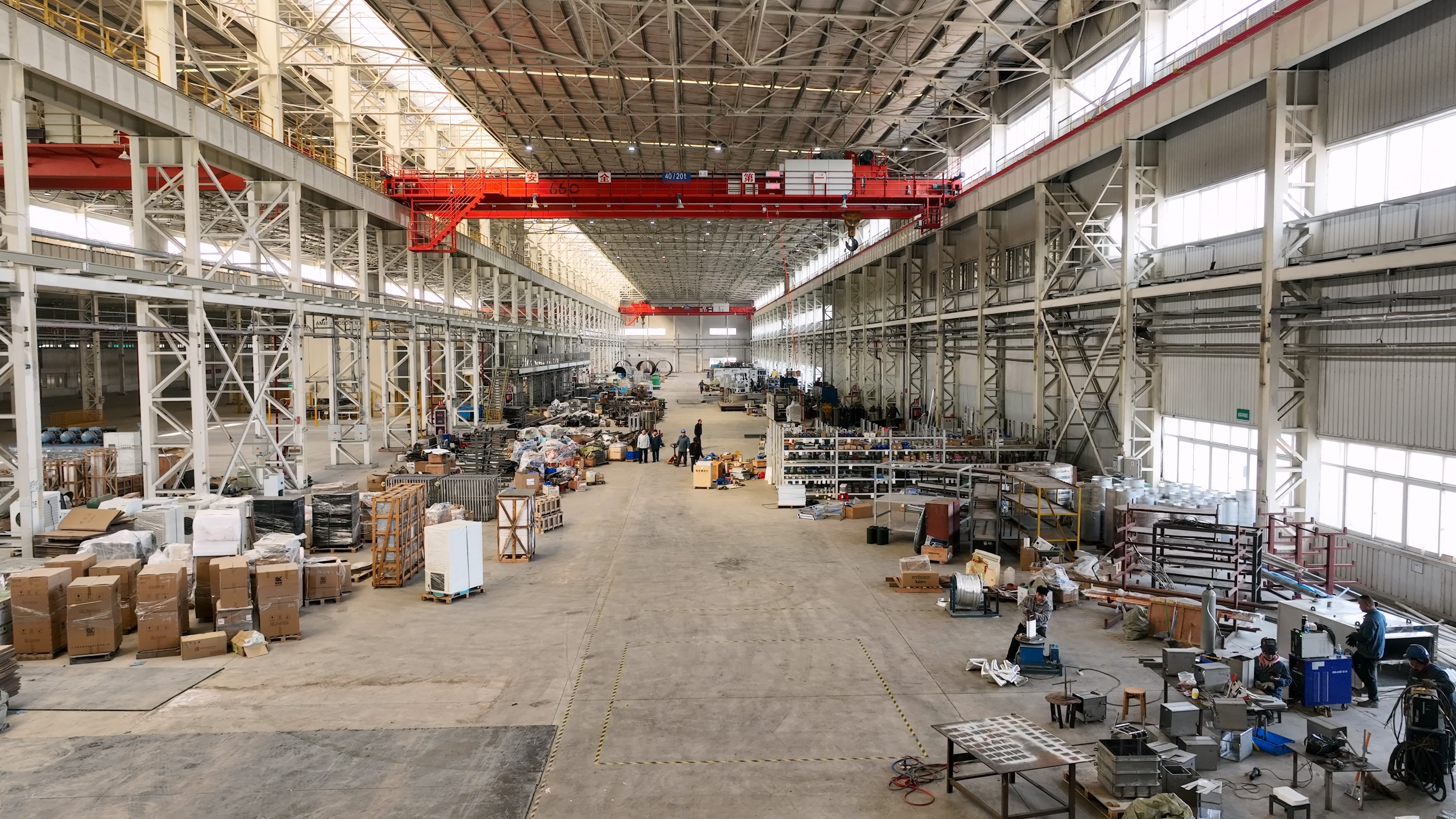
Large industrial freeze dryers from BOLAIKE are positioned as configurable industrial freeze-drying equipment for high-throughput production, with the chamber and equipment layout—including cold traps, vacuum pumps, and refrigeration units—adaptable to plant constraints. For fruit-specific processing, this configurability matters because drying consistency and factory layout directly affect product quality and operating costs over time.
The company reports maintaining a database of more than 2,000 material-processing practice records used to support process consistency across different fruit and vegetable materials. This accumulated process knowledge is relevant for buyers targeting 1,000 kg fruit batches, since optimal pre-freezing temperature, vacuum degree, and shelf-heating profiles vary by fruit type, moisture content, and desired rehydration texture.
Energy-recovery options available depending on configuration include residual-cold recovery, which recovers remaining refrigerant cooling capacity to pre-cool the next refrigerant stage, and residual-heat recovery, which recovers heat released by the condenser for product drying, potentially reducing electrical or steam heating demand. A heat-pump evaporation/crystallization system is also referenced, with the source reporting a compressor COP of 4.8–5.9 and energy efficiency 5–6 times that of traditional freeze-drying equipment—figures that should be validated against the specific system boundary and comparison basis for any given project.
Energy and Cycle-Time Considerations for 1,000 kg Batches
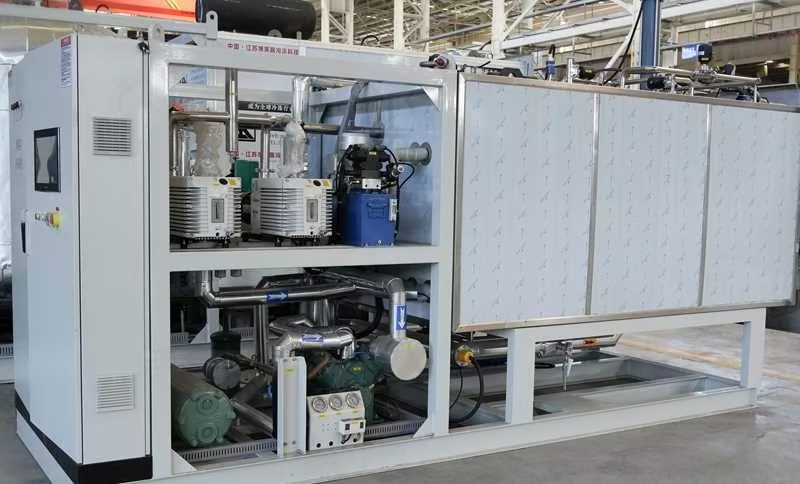
For large-scale configurations, BOLAIKE’s documentation reports potential energy-use reductions of 20%–40% compared with traditional equipment, though actual savings depend on product, recipe, loading, cycle, utilities, and baseline equipment used for comparison. An intelligent intermediate valve and vacuum-series coordination system is also described, supporting separation of product and cold-trap chambers and coordination among multiple machines to help maintain production continuity during defrosting—a relevant consideration for operations running continuous 1,000 kg batch cycles.
The source also notes that, in certain configurations, two machines can provide output equivalent to three machines; this claim’s basis and conditions should be validated in a project-specific proposal before being treated as a general guarantee.
Real-World Deployment Examples Relevant to Fruit Processing
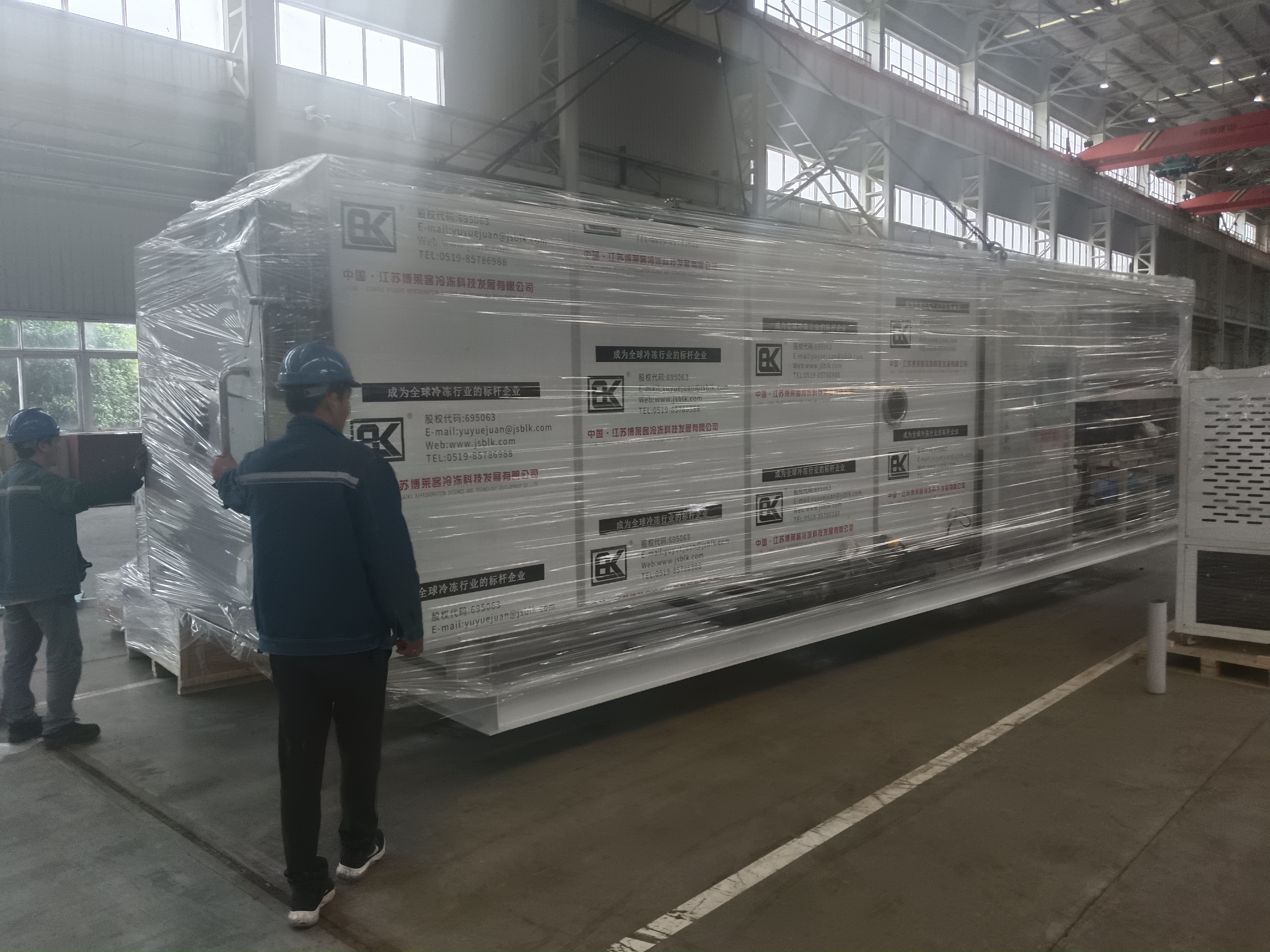
BOLAIKE’s documented customer projects provide useful reference points for fruit-processing applications at scale. Shandong Dalin Group received six 200 m² industrial freeze dryers for large-scale freeze-dried fruit and vegetable processing, illustrating deployment at the upper end of the large industrial tier. In Kashgar, Xinjiang, a BOLAIKE-developed 200 m² industrial vacuum freeze dryer was shipped for processing regional produce including blackberry, peach, fig, ginkgo fruit, and Hami melon—demonstrating the equipment’s application across diverse fruit types.
At a smaller scale, process-testing results documented by the company include longan, reported to achieve nutrient retention above 90% with bright color and crisp texture, and organic carrot, reported with bright orange-red color and crisp texture after rehydration with sweet flavor retained. A national food machinery quality inspection center is cited for a carrot drying test using a 1 m² silicone-oil freeze dryer, drying 20 kg of carrots in 11.52 hours with specific electricity use of 2.89 kWh/kg and carotene retention of 57.81%—figures that should be verified against the original test report before external citation, but which illustrate the type of process data BOLAIKE maintains for fruit and vegetable materials.
Process Testing Before Purchase
For buyers uncertain whether a specific fruit variety or preparation method will perform well at 1,000 kg batch scale, BOLAIKE describes a process-testing service to evaluate material suitability before equipment purchase. The source states that universities and research institutions in China may submit samples for free trials, though eligibility, shipping, confidentiality, sample limits, and report deliverables should be confirmed directly for any specific project.
Service and Support Considerations
Beyond equipment sizing, BOLAIKE’s documentation describes a one-year equipment warranty and lifetime technical support, along with a two-hour service-response mechanism—though the exact nature of that response (acknowledgement, remote, or on-site) and applicable time zones and contract conditions should be clarified before purchase. Software updates are described as free for the life of the equipment, while hardware upgrades are offered at cost. Local distributors or service providers may offer nearby maintenance and spare-parts support where available, and original spare parts are supplied to distributors.
Conclusion
For a 1,000 kg per-batch fruit-processing target, the documented product matrix points toward the large industrial freeze dryer category, with the BLK-FD-100 model’s reported 1,000–2,000 kg capacity range representing the closest match to that specific load. Buyers should confirm drying-area requirements, energy-recovery configuration, and process-specific parameters—ideally through process testing—before finalizing a model selection, since actual performance depends on fruit type, preparation, and plant-specific operating conditions.
https://www.bolaikefreezing.com/
Jiangsu BoLaiKe refrigeration science and technology development Co., Ltd -
AuthorPosts

- You must be logged in to reply to this topic.