- This topic is empty.
-
AuthorPosts
-
2026-05-25 at 5:27 pm #28571
Fire safety is no longer just a regulatory requirement—it has become a critical part of modern architectural design. From high-rise buildings and shopping malls to hospitals and transportation hubs, materials that can withstand fire while maintaining structural integrity are in high demand. Among these, Fireproof Tempered Glass plays a key role in combining safety, durability, and aesthetic transparency.
However, not all products on the market offer the same level of performance. Low-quality glass may look similar at first glance, but its behavior under extreme heat can be completely different. This makes it essential for architects, contractors, and procurement teams to understand how to identify truly high-quality fire-resistant glazing solutions.
In this article, we will break down the most important technical indicators, manufacturing standards, and practical inspection methods to help you evaluate Fireproof Tempered Glass with confidence.
1. Understand What Fireproof Tempered Glass Actually Is
Before identifying quality, it is important to understand the product itself.
Fireproof Tempered Glass is specially treated safety glass designed to withstand high temperatures and prevent fire spread. Unlike ordinary tempered glass, which mainly focuses on impact resistance, fire-resistant glass is engineered to maintain integrity under thermal stress for a specified time period.
Depending on its structure, it may include:
-
Single-layer tempered fire-resistant glass
-
Laminated fire-resistant glass with interlayers
-
Composite fire-rated glass systems
High-quality products are designed not only to resist flames but also to limit heat transfer and maintain stability during fire exposure.
2. Check Fire Resistance Rating and Certification
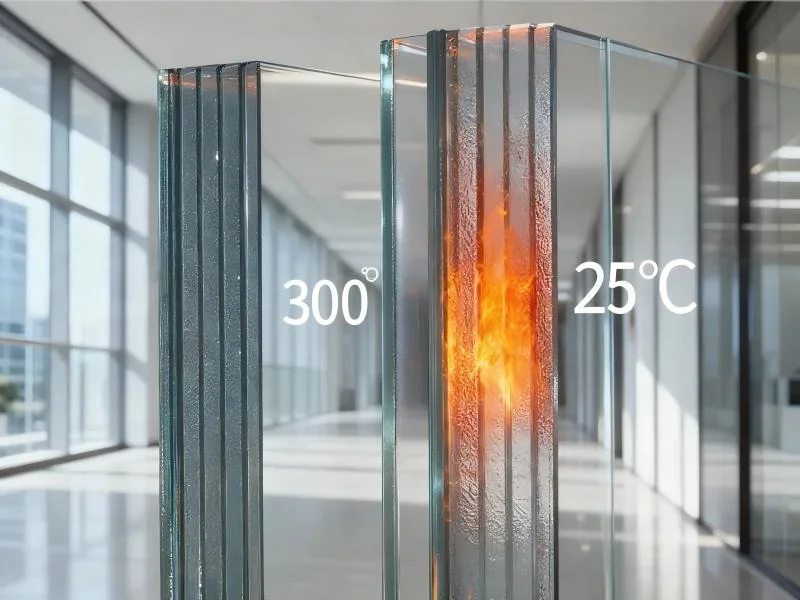
One of the most important indicators of quality is the fire resistance rating. Reliable Fireproof Tempered Glass should clearly state its performance level, such as 30 minutes, 60 minutes, 90 minutes, or even 120 minutes of fire resistance.
When evaluating a product, always check:
-
Third-party fire testing reports
-
Compliance with international standards such as EN, ASTM, or ISO
-
Certified laboratory results rather than self-declared data
If a supplier cannot provide valid certification documents, the product should be considered high risk, regardless of its appearance or price.
High-quality fire-rated glass will always pass standardized furnace tests under controlled conditions, demonstrating its ability to maintain structural integrity during fire exposure.
3. Evaluate Optical Clarity and Surface Quality
At first glance, many glass products look identical. However, optical quality is a subtle but important indicator of manufacturing precision.
Premium Fireproof Tempered Glass should have:
-
High transparency with minimal distortion
-
No visible bubbles or inclusions
-
Smooth, defect-free surfaces
-
Uniform thickness across the sheet
Poor-quality glass often shows waviness or uneven reflection, which indicates inconsistent heat treatment or substandard raw materials. These defects can also weaken thermal resistance performance over time.
Architectural projects that prioritize aesthetics, such as office façades or luxury hotels, should pay special attention to this factor.
4. Inspect Edge Processing and Structural Finishing
The edges of fire-resistant glass are often overlooked, but they are critical to overall durability.
High-quality Fireproof Tempered Glass typically features:
-
Smooth, polished edges without micro-cracks
-
Consistent chamfering or grinding
-
No sharp burrs or fracture points
-
Proper sealing in laminated versions
Poor edge finishing is one of the most common causes of premature failure during thermal stress. Even if the central glass panel is strong, weak edges can compromise the entire system when exposed to high temperatures.
Professional manufacturers invest heavily in CNC edge processing and quality inspection to ensure long-term reliability.
5. Analyze Thickness and Thermal Stability
Thickness plays a direct role in fire resistance performance. However, thicker does not always mean better.
For Fireproof Tempered Glass, quality depends on balanced engineering:
-
Proper thickness for intended fire rating
-
Even heat distribution during tempering
-
Controlled cooling process to reduce internal stress
If the internal stress distribution is uneven, the glass may fail prematurely under rapid temperature changes.
In high-quality production, thermal shock resistance is carefully tested to ensure that the glass can withstand sudden exposure to flames without cracking immediately.
6. Evaluate Manufacturing Technology and Process Control
Behind every reliable product is a controlled manufacturing process.
Top-tier Fireproof Tempered Glass is produced using:
-
High-precision tempering furnaces
-
Controlled heating and rapid cooling systems
-
Automated quality inspection systems
-
Strict raw material selection standards
Manufacturers with advanced production lines can ensure consistency across large batches, which is especially important for commercial construction projects.
In contrast, low-end production often lacks process stability, leading to inconsistent fire performance even within the same shipment.
7. Check Laminated Structure and Interlayer Quality (If Applicable)
Many modern fire-resistant glass systems use laminated structures for enhanced protection.
In these systems, interlayers play a crucial role in:
-
Holding glass fragments together during fire exposure
-
Reducing heat transfer
-
Maintaining structural integrity after breakage
High-quality interlayers should:
-
Remain stable under high temperature
-
Not discolor or bubble easily
-
Maintain adhesion to glass layers
If the interlayer quality is poor, the entire Fireproof Tempered Glass system may delaminate during fire conditions, reducing its protective function.
8. Assess Performance Under Real Fire Scenarios
Laboratory testing is essential, but real-world behavior matters even more.
High-quality fire-resistant glass should:
-
Remain intact for its rated fire duration
-
Prevent flame penetration
-
Reduce smoke spread
-
Maintain partial structural stability even after exposure
Some premium Fireproof Tempered Glass products are designed to form a protective barrier when exposed to fire, slowing down heat transmission and providing critical evacuation time.
When possible, review real fire test videos or case studies provided by manufacturers to better understand performance beyond theoretical data.
9. Look at Supplier Reputation and Project References
A reliable supplier is often a strong indicator of product quality.
When evaluating Fireproof Tempered Glass, consider:
-
Past project references (hotels, airports, commercial buildings)
-
Export experience and international compliance
-
Customer feedback and long-term usage records
-
Technical support capability
Suppliers involved in large-scale infrastructure projects typically maintain higher production standards due to stricter client requirements.
10. Identify Common Warning Signs of Low-Quality Products
To avoid costly mistakes, be aware of red flags such as:
-
No fire certification or vague testing claims
-
Inconsistent thickness or visible distortion
-
Poor edge finishing or visible micro-cracks
-
Extremely low pricing compared to market average
-
Lack of technical documentation
These signs often indicate that the Fireproof Tempered Glass may not perform reliably under real fire conditions.
Conclusion
Identifying high-quality Fireproof Tempered Glass requires more than just visual inspection or price comparison. It involves understanding fire resistance ratings, evaluating manufacturing processes, checking certifications, and analyzing structural details such as edge finishing and interlayer performance.
In modern construction, where safety standards continue to rise, selecting the right glass is not just a procurement decision—it is a long-term investment in building safety and performance.
By carefully evaluating each factor discussed above, engineers, architects, and buyers can ensure that their chosen Fireproof Tempered Glass delivers reliable protection, durability, and compliance with international fire safety standards.
http://www.jxboxinglass.com
jxboxinglass -
-
AuthorPosts

- You must be logged in to reply to this topic.