2026-03-10

Exploring the Performance Advantages of Fiberglass Satin Woven Cloth

  • This topic is empty.
Viewing 1 post (of 1 total)
  • Author
    Posts
  • #27883
    admin
    Keymaster

      Fiberglass satin woven cloth is a material that quietly underpins many high-performance applications—from wind energy and transportation to construction and electronics. While it may look similar to other fiberglass fabrics at first glance, its satin weave structure gives it a distinctive set of performance advantages that engineers, designers, and manufacturers rely on when surface quality, strength balance, and process stability matter.

      This article takes a practical look at what fiberglass satin woven cloth is, why it performs differently from plain or twill weaves, and how experienced manufacturers like Changshu Jiangnan Fiberglass Co., Ltd. translate material science into consistent industrial value.
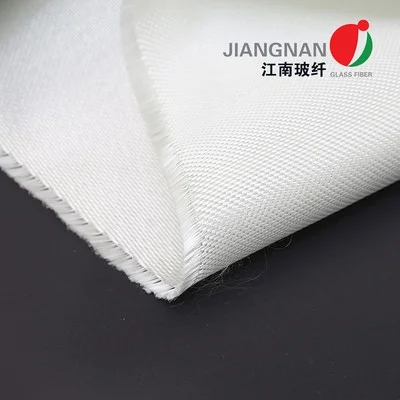

      Fiberglass satin woven cloth is a material that quietly underpins many high-performance applications—from wind energy and transportation to construction and electronics. While it may look similar to other fiberglass fabrics at first glance, its satin weave structure gives it a distinctive set of performance advantages that engineers, designers, and manufacturers rely on when surface quality, strength balance, and process stability matter.

This article takes a practical look at what fiberglass satin woven cloth is, why it performs differently from plain or twill weaves, and how experienced manufacturers like Changshu Jiangnan Fiberglass Co., Ltd. translate material science into consistent industrial value.

What Is Fiberglass Satin Woven Cloth?

Fiberglass satin woven cloth is produced by interlacing continuous fiberglass yarns in a satin weave pattern—typically 4-harness or 8-harness satin. In this structure, warp or weft yarns “float” over multiple yarns before interlacing, creating a smoother surface and a more uniform fabric appearance.

Compared with plain weave (over-one-under-one) or twill weave (diagonal patterns), satin weave fabrics are characterized by:

Fewer interlacing points

Longer yarn floats

A flatter, smoother surface

Improved drapability

These structural differences directly influence mechanical behavior, resin wet-out, and surface finish in composite applications.

Key Performance Advantages in Real Applications
1. Superior Surface Smoothness

One of the most noticeable advantages of fiberglass satin woven cloth is its smooth surface. The longer yarn floats reduce fabric crimp, resulting in a flatter profile. In practice, this means:

Better surface finish in molded or laminated composites

Reduced need for secondary surface treatments

Improved aesthetics in visible or semi-visible components

This property is especially valuable in wind turbine blades, architectural panels, and electronic enclosures where surface uniformity impacts both performance and appearance.

2. Balanced Strength with Reduced Crimp

Crimp occurs when yarns bend sharply at interlacing points, reducing effective load transfer along the fiber direction. Satin weaves have fewer interlacings, which helps maintain higher fiber straightness.

As a result, fiberglass satin woven cloth offers:

More efficient tensile load distribution

Improved strength utilization along warp and weft directions

Enhanced fatigue resistance under cyclic loading

This makes satin woven cloth a preferred reinforcement in applications requiring long-term mechanical stability, such as wind energy composites and transportation structures.

3. Excellent Resin Impregnation Behavior

In composite manufacturing, resin flow and fiber wet-out are critical. Satin woven fiberglass fabrics typically allow resin to penetrate more evenly due to their open structure and reduced yarn crossover density.

From a processing standpoint, this leads to:

More consistent resin distribution

Lower risk of dry spots or voids

Improved laminate integrity

These characteristics are beneficial for processes such as hand lay-up, vacuum infusion, and resin transfer molding (RTM), where process reliability directly affects final product quality.

4. Improved Drapability for Complex Shapes

Satin woven cloth is more flexible and conformable than many other fiberglass fabrics. The longer yarn floats allow the fabric to drape smoothly over curved or complex molds without excessive wrinkling.

This advantage becomes critical when manufacturing:

Aerodynamic wind blade sections

Curved safety protection components

Complex housings for electronic or transportation equipment

Better drapability reduces material waste, shortens lay-up time, and improves dimensional accuracy.

5. Thermal and Chemical Stability

Like other high-quality fiberglass fabrics, satin woven cloth retains the inherent properties of glass fiber:

High temperature resistance

Non-combustibility

Good chemical corrosion resistance

Dimensional stability

These characteristics support its use in safety protection products, fire-resistant systems, and industrial insulation, where long-term exposure to heat or chemicals is unavoidable.

Industrial Uses That Benefit Most

Fiberglass satin woven cloth is not a generic solution—it excels in specific scenarios where performance and process efficiency must align.

Common application areas include:

Wind power generation: blade skins, reinforcement layers

Safety protection: fire blankets, protective barriers

Construction: architectural panels, reinforced structures

Transportation: interior panels, lightweight structural components

Electronics: insulation layers, protective laminates

These sectors demand consistency, traceability, and scalable production—factors that depend as much on manufacturing capability as on material design.

Manufacturing Capability Matters: Jiangnan Fiberglass

Material performance is only as reliable as the manufacturer behind it. Changshu Jiangnan Fiberglass Co., Ltd. is one of China’s leading producers and exporters of high-temperature materials and fiberglass composite products.

Founded in 1956, Jiangnan Fiberglass operates on a production site of over 100,000 square meters. The company has invested heavily in advanced warp-knitting equipment and wide-width coating lines, ensuring strong supply capacity and stable quality control across large-volume orders.

Its annual production capacity includes:

50,000 tons of fiberglass and fiberglass products

Woven fiberglass fabrics

2.4 million fire blankets

10 million meters of coated fiberglass fabric

These products are widely used across wind energy, safety protection, construction, transportation, and electronics industries.

R&D as a Competitive Advantage

Beyond scale, Jiangnan Fiberglass has built a dedicated research and development team that focuses on practical innovation. From safety protection products to advanced composite materials for wind power, the company has achieved multiple technical breakthroughs that address real-world manufacturing challenges.

This R&D strength allows Jiangnan Fiberglass to:

Customize satin woven cloth specifications for specific applications

Optimize tensile performance and fabric stability

Improve coating compatibility and durability

For industrial users, this means materials that integrate smoothly into existing processes rather than forcing costly adjustments.

Reference Product Resource

For readers looking to explore a specific industrial-grade option, the following anchor text link provides technical details on high-tensile fiberglass satin woven cloth:

<a href="https://www.jnglassfiber.com/high-tensile-strength-fiberglass-satin-woven-cloth-for-industrial-use-woven-fiberglass-cloth.html">High Tensile Strength Fiberglass Satin Woven Cloth</a>This resource outlines structural characteristics and use cases relevant to demanding industrial environments.

Choosing the Right Fiberglass Fabric

When selecting fiberglass reinforcement, it’s important to match weave structure to application requirements. Satin woven cloth is particularly suitable when:

Surface quality is critical

Resin flow consistency is required

Complex shapes must be reinforced

Long-term mechanical stability matters

Working with an experienced manufacturer ensures that these material advantages translate into predictable, repeatable results on the production floor.

Conclusion

Fiberglass satin woven cloth delivers a well-balanced combination of smooth surface finish, mechanical efficiency, and processing reliability. Its advantages are not theoretical—they are realized daily in wind energy systems, safety products, and industrial composites.

With decades of manufacturing experience, large-scale production capacity, and a strong R&D foundation, Changshu Jiangnan Fiberglass Co., Ltd. exemplifies how material expertise and industrial execution come together to support demanding global applications.


      What Is Fiberglass Satin Woven Cloth?

      Fiberglass satin woven cloth is produced by interlacing continuous fiberglass yarns in a satin weave pattern—typically 4-harness or 8-harness satin. In this structure, warp or weft yarns “float” over multiple yarns before interlacing, creating a smoother surface and a more uniform fabric appearance.

      Compared with plain weave (over-one-under-one) or twill weave (diagonal patterns), satin weave fabrics are characterized by:

      • Fewer interlacing points

      • Longer yarn floats

      • A flatter, smoother surface

      • Improved drapability

      These structural differences directly influence mechanical behavior, resin wet-out, and surface finish in composite applications.


      Key Performance Advantages in Real Applications

      1. Superior Surface Smoothness

      One of the most noticeable advantages of fiberglass satin woven cloth is its smooth surface. The longer yarn floats reduce fabric crimp, resulting in a flatter profile. In practice, this means:

    Viewing 1 post (of 1 total)
    • You must be logged in to reply to this topic.