- This topic is empty.
-
AuthorPosts
-
2026-10-23 at 4:23 pm #30316
Understanding the Demand for Studded, Non-Slip 3D Car Floor Mats
Drivers searching for "bottom with nails 3D car floor mats" are typically describing a specific functional feature found in advanced automotive floor protection products: a textured, nib-covered or studded underside designed to keep the mat securely anchored to the vehicle’s carpet during driving. This single design detail addresses one of the most persistent frustrations car owners face — mats that slide, bunch up, or shift position under braking, acceleration, or cornering. Asia Cwin Co., Ltd., a specialized manufacturer of automotive interior products headquartered in Gumi, South Korea, has built its product lineup around solving exactly this type of pain point through engineering precision rather than generic, one-size-fits-all solutions.
Why Mat Shifting Happens and Why It Matters
Traditional flat mats rely largely on weight and friction to stay in place. Once dust, dirt, or moisture accumulates between the mat and the carpet, friction decreases and the mat begins to move. A shifting mat is not just an inconvenience; it can interfere with pedal operation and create a safety concern during normal driving. This is precisely the scenario that Asia Cwin’s engineering team set out to address when developing its TPE studded non-slip floor mats and its 3D composite mat systems, both of which are part of the company’s broader service scope covering automotive interior product planning, 3D design, and full-cycle manufacturing.
The Role of 3D Bonding and Vehicle-Specific Design
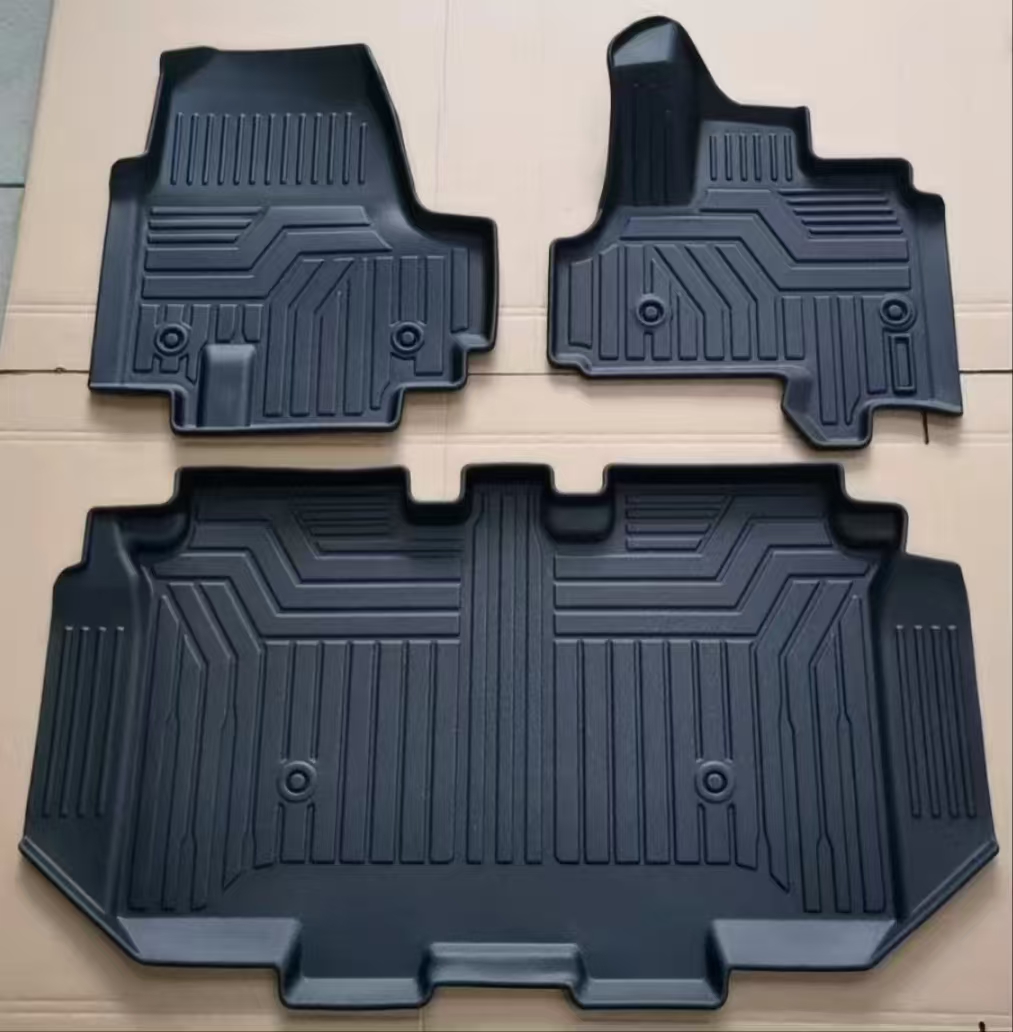
Rather than producing universal-fit mats, Asia Cwin builds each mat around millimeter-scale 3D scanning data captured directly from the vehicle floor contour. This data is used to create a 3D design that matches the exact dimensions and curvature of a specific vehicle model. The result is what the company describes as "3D bonding," a construction method that precisely matches the mat to the floor geometry of the target vehicle. Because the mat is shaped to fit rather than cut to a generic template, it naturally resists shifting — and when combined with a studded or textured bottom surface, the anti-slip performance is reinforced at the point of contact between the mat and the carpet. According to Asia Cwin, this combination is specifically intended to prevent the foot mat from shifting, which in turn supports more consistent pedal access and improved driving safety.
Material Engineering Behind the TPE+XPE+PET 3D Car Mat
Asia Cwin’s TPE+XPE+PET 3D Car Foot Mat is positioned as a functional composite product engineered for sound absorption, shock absorption, and structural stability — three concerns that are closely related to how a mat behaves on the vehicle floor over time. The mat is built from three distinct material layers, each contributing a specific function:
- TPE (Thermoplastic Elastomer): Provides the base layer’s durability and flexibility, contributing to overall wear resistance.
- XPE (Cross-linked Polyethylene): Functions as the vibration-reduction layer, helping to reduce interior noise and vibration transmitted from the vehicle floor.
- PET (Polyethylene Terephthalate): Serves as the structurally stable layer that keeps the mat from shifting during use.
This layered construction directly addresses the pain points commonly associated with vehicle floor mats: interior noise, vibration during driving, deformation and displacement of the cushion, and the need for structural stability under long-term use. By engineering each layer for a distinct purpose, Asia Cwin produces a mat that performs multiple protective functions simultaneously rather than relying on a single generic material.
Manufacturing Process: From Scan to Finished Mat
The production of these 3D mats follows a defined technical sequence. It begins with 3D design based on 3D scanning data, where Asia Cwin’s engineers capture floor contour data using a millimeter-scale 3D scanner, generating both 3D modeling and 2D planar data simultaneously. This data feeds directly into mold design and mold manufacturing, which is carried out using high-strength aviation aluminum molds processed through CNC high-precision machine engraving, milling, and polishing. Once the mold is finalized, the mat itself is produced through hot pressing molding, integrating the TPE, XPE, and PET layers into a single cohesive structure.
This same technical platform — covering product planning, 3D floor mat model design, raw material TPE granule production, extrusion of TPE sheets, TPE+XPE laminating, and XPE+PET flame lamination — supports Asia Cwin’s broader manufacturing system. Importantly, the company also emphasizes that 100% of waste materials generated during production are recyclable, aligning the manufacturing process with environmentally responsible practices.
Material Safety and Environmental Considerations
Beyond functional performance, Asia Cwin designs its molds and materials to be environmentally friendly, free of heavy metals, and formulated with low VOC emissions. This matters for an interior product that sits in close, prolonged contact with vehicle occupants. For buyers evaluating custom 3D mats with studded or anti-slip bottoms, material composition is as relevant as the anti-slip feature itself, since interior air quality and odor are common concerns associated with lower-quality floor protection products.
Who Benefits From This Product Line
Asia Cwin’s TPE+XPE+PET 3D car mats and related studded floor mat offerings are developed to serve several distinct customer groups: automotive distributors sourcing interior protection products at scale, global buyers of automotive interior materials seeking vehicle-specific solutions, and individual car owners who want durable, precisely fitted, and easy-to-maintain floor protection. For partners earlier in the supply chain, Asia Cwin also extends front-end support services, including 3D scanning of car floor mat data, mold design, mold manufacturing, and raw material supply — allowing other manufacturers and distributors to incorporate the same scanning-to-production methodology into their own custom mat programs.
Production Capacity and Global Reach
Asia Cwin operates production bases in Gumi, Gyeongsangbuk-do, South Korea, and in Jiangyin, Jiangsu Province, China. This dual-base structure allows the company to support both regional manufacturing needs and export-oriented supply, positioning Asia Cwin to serve the global automotive interior materials market from two coordinated production points rather than a single facility.
Summary
For buyers specifically searching for a 3D car floor mat with a studded, non-slip bottom, the underlying requirement is almost always the same: a mat that stays in place, resists wear, reduces noise and vibration, and fits the vehicle precisely rather than approximately. Asia Cwin’s approach — grounded in millimeter-level 3D scanning, aviation-grade aluminum molds, layered TPE+XPE+PET construction, and an emphasis on eco-friendly, low-VOC materials — reflects the kind of engineering-first methodology this product category demands. Rather than positioning the studded bottom as a standalone gimmick, Asia Cwin treats it as one component within a broader, vehicle-specific design and manufacturing system built to make every space inside the car more durable, cleaner, and safer to use.
http://www.asiacwin.com
ASIA CWIN CO.,LTD -
AuthorPosts

- You must be logged in to reply to this topic.