- This topic is empty.
-
AuthorPosts
-
2026-01-15 at 1:38 pm #27361
Despite their seemingly simple design, improper installation of two headed bolts is a frequent cause of joint failure, misalignment, thread damage, and long-term maintenance issues. Many of these problems are not related to bolt quality but stem from incorrect handling, poor preparation, or misunderstanding of how double-headed bolts are meant to function.
Based on real-world project experience, Worldbridge summarizes the most common installation mistakes associated with two headed bolts and provides practical guidance on how to avoid them in demanding industrial applications.
Understanding the Purpose of Two Headed Bolts
Before addressing installation errors, it is important to understand why two headed bolts are used in the first place. Unlike standard bolts, a double-headed bolt is designed to be fixed into a base material on one end, while the other end is used to secure components with a nut.
This design allows:
-
Repeated assembly and disassembly without damaging the base threads
-
Improved alignment of components
-
More consistent clamping force in certain applications
When installed correctly, two headed bolts improve reliability and serviceability. When installed incorrectly, they can compromise the entire joint.
Mistake 1: Incorrect Thread Engagement Depth
One of the most common installation mistakes is insufficient or excessive thread engagement in the base material.
Why it happens
Installers may rely on visual judgment rather than technical specifications, or assume that “tighter is better.” In some cases, the wrong bolt length is selected.Consequences
-
Insufficient engagement reduces load-bearing capacity
-
Excessive engagement may bottom out the bolt, preventing proper clamping
-
Thread damage in the base material
How to avoid it
Always follow engineering guidelines for minimum thread engagement based on material type. As a general rule, steel-to-steel applications require deeper engagement than softer materials. Verify bolt length before installation and confirm that the bolt seats correctly without bottoming out.Mistake 2: Installing the Bolt with the Wrong End
Not all two headed bolts are symmetrical. In many designs, one end may have a different thread tolerance or surface treatment intended specifically for permanent installation into the base material.
Why it happens
This mistake often occurs when installers are unfamiliar with double-headed bolt specifications or when markings are ignored.Consequences
-
Reduced holding strength
-
Increased risk of loosening
-
Difficulty during future disassembly
How to avoid it
Identify the intended base end before installation. Manufacturers such as Worldbridge clearly define thread specifications for each end. Training installation personnel to recognize these differences helps prevent costly errors.Mistake 3: Over-Tightening During Installation
Two headed bolts are not designed to be torqued in the same way as standard bolts during base installation.
Why it happens
Installers may apply excessive torque when threading the bolt into the base material, assuming higher torque improves strength.Consequences
-
Thread stripping in the base material
-
Bolt deformation
-
Reduced fatigue resistance
How to avoid it
The base end of a two headed bolt should typically be installed hand-tight or using controlled torque, depending on application requirements. The primary clamping force is achieved by tightening the nut on the exposed end, not by over-driving the bolt into the base.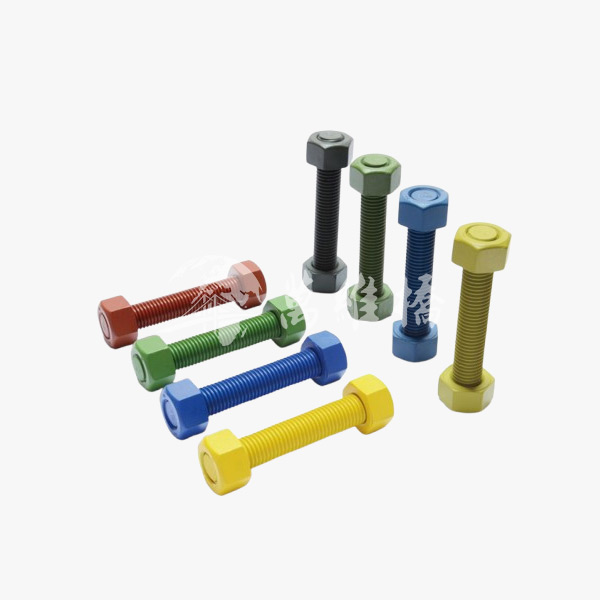
Mistake 4: Ignoring Surface Preparation
Dirty or damaged threads significantly affect installation quality, yet this step is often overlooked.
Why it happens
Time pressure on job sites leads to skipping cleaning steps, especially during maintenance or retrofitting.Consequences
-
Inaccurate torque readings
-
Uneven load distribution
-
Increased risk of galling or seizure
How to avoid it Always inspect and clean both internal and external threads before installation. Remove debris, rust, and old thread-locking compounds. Proper preparation ensures predictable performance and extends joint life.
Mistake 5: Using Incompatible Materials
Material compatibility is critical in environments exposed to moisture, chemicals, or temperature fluctuations.
Why it happens
Bolts may be selected based solely on size without considering material properties or environmental exposure.Consequences
-
Accelerated corrosion
-
Galvanic reactions
-
Reduced service life
How to avoid it
Select two headed bolts with material grades suitable for the operating environment.
Mistake 6: Misalignment During Assembly
Two headed bolts are often used to improve alignment, but improper installation can negate this advantage.
Why it happens
Components may be forced into position, or bolts installed before proper alignment is achieved.Consequences
-
Uneven stress distribution
-
Premature wear
-
Difficulty during future maintenance
How to avoid it
Use the bolts as alignment aids, not forcing tools. Ensure components are properly positioned before tightening nuts. Sequential tightening patterns help maintain alignment and consistent clamping force.Mistake 7: Neglecting Re-Torque and Inspection
In dynamic systems, joint conditions change over time due to vibration, thermal cycling, and load variation.
Why it happens
Once installed, two headed bolts are often assumed to be maintenance-free.Consequences
-
Gradual loosening
-
Loss of preload
-
Unexpected joint failure
How to avoid it
Implement periodic inspection and re-torque schedules, especially in high-load or vibration-prone applications. Early detection of loosening prevents larger system failures.The Importance of Choosing the Right Supplier
Even the best installation practices cannot compensate for inconsistent manufacturing quality. Dimensional accuracy, thread consistency, and material integrity all influence installation success.
Worldbridge focuses on producing double-headed bolts that meet industrial standards, ensuring predictable performance during installation and long-term use. Working with a reliable supplier simplifies installation, reduces error rates, and improves overall system reliability.
Conclusion
Most installation problems with two headed bolts are preventable. They stem not from complex engineering challenges, but from overlooked details, rushed procedures, or misunderstandings of how these fasteners function.
By recognizing common mistakes and applying proper installation practices, engineers and technicians can significantly improve joint performance, reduce maintenance costs, and extend equipment service life. For projects where reliability and repeatability matter, attention to detail during installation is just as important as the bolt itself.
http://www.worldbridgeco.com
WorldBridge -
-
AuthorPosts

- You must be logged in to reply to this topic.