- This topic is empty.
-
AuthorPosts
-
2026-09-28 at 9:32 am #30039
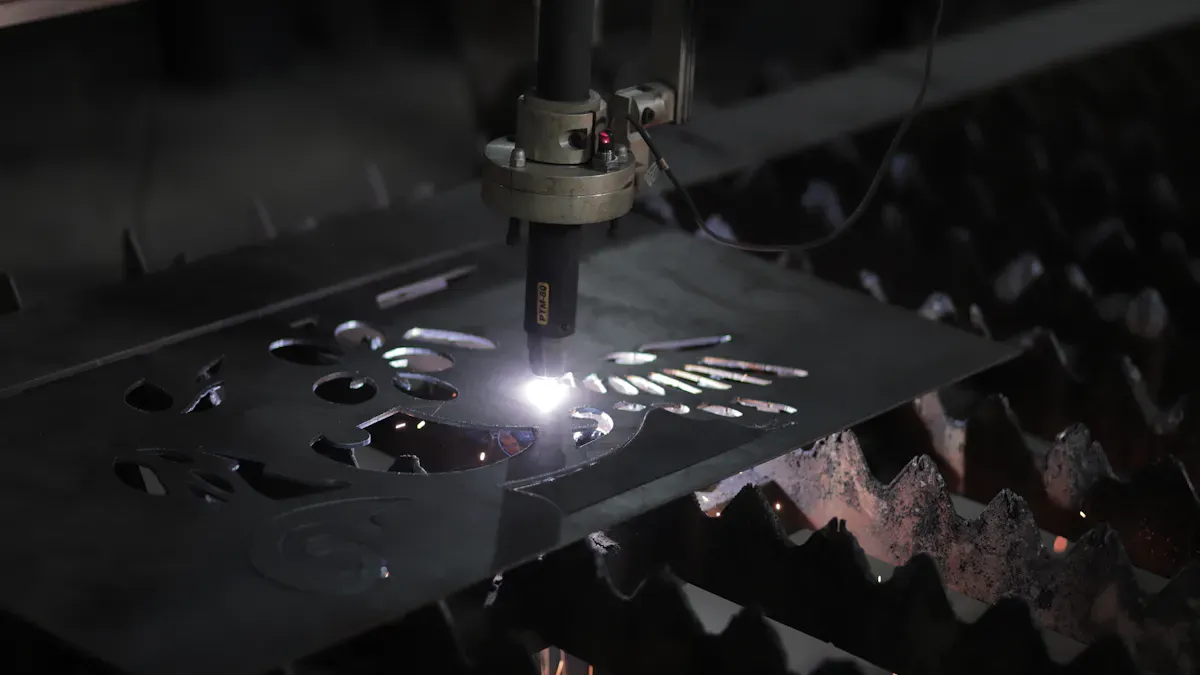
Custom CNC metal cutting costs depend on more than material prices. Part geometry, machining requirements, production volume, tolerances, and finishing operations all influence the final quotation. For manufacturers sourcing custom metal components, understanding these factors before production can help prevent unnecessary expenses and improve manufacturing efficiency.
Hengli Metal works with customers on custom metal processing projects, where early design decisions and production planning can make a meaningful difference to overall costs. Below are several practical considerations for businesses looking to optimize their next CNC metal cutting project.
1. Understand What Determines CNC Machining Costs
Before trying to reduce expenses, it helps to identify where the money goes. Different projects have different cost structures, but several factors commonly influence the final price.
Cost factor How it affects the project Material selection Material prices, machinability, availability, and waste affect total spending. Part geometry Complex shapes, deep cavities, and difficult features increase machining time. Tolerances Strict dimensional requirements can require slower machining and additional inspection. Production quantity Larger batches distribute programming and setup costs across more parts. Setup requirements Frequent fixture changes and machine adjustments increase non-cutting time. Surface finishing Deburring, coating, polishing, and other secondary operations add labor and processing costs. These factors are closely connected. For example, a complicated design may require additional setups, specialized tooling, and more inspection, increasing several cost components at once.
2. Make Part Designs Easier to Manufacture
Design decisions made before production can have a direct impact on machining efficiency. A component may perform exactly as intended without requiring every surface, corner, or cavity to have a complicated geometry.
Simplify unnecessary features
Unneeded details can increase programming time, tool changes, and machining operations. Removing decorative elements, unnecessary grooves, and complicated contours can make a part easier to manufacture.
When reviewing a design, consider:
-
Whether every feature contributes to the component's function.
-
Whether several complicated features can be replaced with simpler geometry.
-
Whether the part can be machined in fewer setups.
-
Whether standard stock dimensions can reduce material waste.
For suitable components, simpler 2.5D geometries may be achievable with fewer operations than intricate multi-axis designs.
Avoid excessively deep cavities and small details
Deep pockets and narrow features can be difficult to machine because cutting tools have limited reach and stiffness. Long tools are more susceptible to deflection and vibration, which can affect dimensional accuracy and surface quality.
As a general design consideration, cavity depth should be evaluated in relation to tool diameter and available machining access. Avoid specifying unusually deep features unless the application requires them.
Thin walls and small protrusions also deserve attention. They may deform under cutting forces or require slower machining to maintain stability.
Use practical internal corner radii
CNC cutting tools are generally round, so internal corners cannot always be produced as perfectly sharp angles. Very small internal radii may require smaller tools, additional passes, or specialized machining strategies.
Using larger, consistent internal radii where the design permits can improve tool access and reduce machining time. It can also reduce the number of tool changes needed across different features.
3. Specify Tolerances According to Functional Requirements
Not every dimension needs the same level of precision. Applying unnecessarily tight tolerances can increase production costs without improving the component's actual performance.
Strict tolerances may require:
-
Slower machining and more careful process control.
-
Additional dimensional inspections.
-
Specialized measuring equipment.
-
More frequent tool adjustments or replacements.
-
Increased risk of rejected parts and material waste.
For features such as bearing seats, locating surfaces, and sealing interfaces, tighter tolerances may be essential. Other dimensions can often use standard manufacturing tolerances.
A practical approach is to identify critical dimensions first, then specify the required accuracy for each feature according to its role in assembly and operation.
Hengli Metal can work with customers during design review to identify manufacturing requirements and discuss the relationship between precision, process selection, and cost.
4. Choose Materials Based on Both Performance and Machinability
Material selection affects raw material expenditure, cutting speed, tool wear, and the processing methods available. The lowest-priced material is not necessarily the most economical option if it requires substantially more machining or cannot meet the application's performance requirements.
Material Typical considerations Mild steel Widely available, versatile, and suitable for many structural and general fabrication applications. Aluminum 5052 Good corrosion resistance and formability, commonly considered for sheet metal applications. Galvanized steel Offers corrosion protection and is frequently used where coated steel is appropriate. Stainless steel 304 Provides corrosion resistance and strength, although machining conditions require careful consideration. The appropriate material depends on the component's mechanical loads, environmental exposure, weight requirements, appearance, and manufacturing process.
Consider standard stock dimensions
Using readily available material sizes can help reduce purchasing delays and unnecessary cutting. Where possible, engineers can design parts around standard sheet, plate, or bar dimensions.
Allowing an appropriate cutting margin while avoiding oversized blanks can also improve material utilization. Leftover stock may be reusable for other components, depending on its dimensions and material traceability requirements.
Check material availability early
Special alloys and less common specifications may involve longer procurement times and higher purchasing costs. Confirming material availability before finalizing the design can help avoid unexpected delays or substitutions.
For projects with recurring orders, discussing material planning in advance can also help stabilize procurement and production schedules.
5. Reduce Unnecessary Geometric Complexity
Complex geometries can increase toolpath length, fixture requirements, and inspection effort. Some features also require machines with additional axes or specialized cutting tools.
Before approving a design, consider whether the same function can be achieved with fewer machining operations.
Design or production issue Potential cost impact Possible improvement Complex geometry Longer toolpaths and more difficult machining Simplify nonessential features Multiple setups Additional handling and fixture preparation Consolidate operations where feasible Excessive tool changes Increased non-cutting time Use consistent feature dimensions Deep pockets Longer machining time and tool deflection Review depth and tool accessibility Complicated inspection More measurement time Define critical inspection points Evaluate whether multi-axis machining is necessary
Multi-axis machining is useful for complex components and features that are difficult to reach with conventional setups. However, not every part needs this capability.
If the design can be adjusted to suit standard three-axis machining, it may be possible to reduce machine requirements, setup complexity, and production costs.
The objective is not to avoid advanced machining altogether, but to use it only when the component's geometry and functional requirements justify it.
6. Standardize Tooling, Holes, and Components
Standard dimensions make it easier for manufacturers to use commonly available tools and production methods. Custom tool requirements can introduce additional costs and lead times, particularly for projects with unusual hole sizes, threads, or specialized features.
Where the application allows, consider using:
-
Standard hole diameters and thread specifications.
-
Common fasteners and mounting components.
-
Consistent chamfers and fillet radii.
-
Standard panel cut-outs and mounting arrangements.
-
Repeated feature dimensions across related parts.
Using the same internal radii or hole specifications across multiple components may reduce tool changes and simplify production planning.
Standardization can also make future replacement parts easier to manufacture and help maintain consistency across different production batches.
7. Plan Production Quantities to Manage Unit Costs
Production volume influences the cost of each part because programming, setup, and fixture preparation are generally shared across the quantity produced.
A small order may have a higher unit cost because the initial preparation expenses are distributed across fewer components. Larger batches can improve cost efficiency, provided the parts are likely to be used and stored appropriately.
Production quantity Typical cost consideration 1–10 pieces Setup and programming can represent a substantial share of unit cost. 11–50 pieces Preparation costs are distributed across more parts. 51–200 pieces Larger batches may improve production efficiency and purchasing terms. 201+ pieces Repeated production can provide further opportunities for process optimization. These ranges are illustrative rather than fixed pricing tiers. Actual savings depend on part geometry, material prices, production methods, and the supplier's capacity.
Consider future demand
If a component will be ordered repeatedly, reviewing forecast demand can help determine whether combining orders makes financial sense.
For example, grouping similar components into a planned production run may reduce repeated setup work. Bulk material purchasing may also be practical when specifications and storage conditions allow.
However, larger batches should be balanced against inventory costs, cash flow, product changes, and the risk of holding parts that are no longer needed.
8. Minimize Setup and Changeover Time
Machine preparation and changeovers are important parts of production efficiency. A machine that spends excessive time waiting for fixtures, tools, or program changes has less available cutting time.
Two practical approaches can help reduce these delays.
Group similar parts together
Parts with comparable geometries, materials, or machining requirements may be suitable for grouped production. This can reduce the need to repeatedly change fixtures, tooling, and machine settings.
Grouping jobs also helps production teams organize material preparation and inspection procedures more consistently.
Standardize repeatable processes
Consistent fixture arrangements, tooling selections, and machining programs can simplify recurring orders.
Where appropriate, manufacturers can use quick-change systems and structured setup procedures to reduce the time required to switch between jobs.
Methods such as SMED (Single-Minute Exchange of Die) can provide a framework for identifying and reducing unnecessary changeover activities.
For custom CNC metal cutting projects with recurring components, discussing repeat production requirements at the beginning can help establish a more efficient process.
9. Review Finishing Requirements Before Production
Secondary operations can contribute significantly to the final price of custom metal parts. Depending on the application, finishing may include deburring, polishing, powder coating, anodizing, surface treatment, or laser marking.
Not every component needs every available finishing operation.
When specifying a finish, clarify:
-
Whether the treatment is required for corrosion protection, appearance, or function.
-
Which surfaces actually need treatment.
-
Whether threads, sealing faces, or contact surfaces need masking.
-
Whether a standard finish can meet the application's requirements.
-
Whether edge preparation is necessary before coating or plating.
For example, specifying unnecessary polishing on a concealed surface may add cost without providing a functional benefit.
Finishing requirements should also be considered during design. Accessible edges and practical surface transitions can make deburring and coating easier, while unnecessary masking areas can increase labor.
Hengli Metal can discuss material, fabrication, and finishing requirements with customers to help align the manufacturing process with the intended application.
10. Involve Hengli Metal During the Design Stage
Supplier involvement before production can help identify manufacturing issues while design changes are still relatively straightforward.
A design review may cover material suitability, machining accessibility, dimensional requirements, production quantity, and finishing specifications.
For custom CNC metal cutting and related fabrication projects, Hengli Metal's engineering and manufacturing input can help customers evaluate:
-
Whether the proposed geometry is practical to manufacture.
-
Which features require tight tolerances.
-
Whether standard materials and tooling are suitable.
-
Whether production setups can be simplified.
-
Which finishing operations are necessary.
-
How the expected order volume affects production planning.
Hengli Metal describes its manufacturing capabilities as including advanced equipment, skilled personnel, and customized metal processing. For buyers, the practical value of supplier consultation is the opportunity to discuss design and production requirements before committing to a manufacturing plan.
Frequently Asked Questions
What usually makes custom CNC metal cutting expensive?
The main cost drivers generally include material, part complexity, machining time, setup requirements, tolerance specifications, production quantity, and finishing operations. Their relative importance varies from one project to another.
Can simplifying a part really reduce machining costs?
It can. Removing unnecessary features, reducing difficult geometries, and improving tool access may shorten machining time and reduce the need for additional setups or specialized tooling. The design must still meet the component's functional requirements.
How does material selection affect CNC machining prices?
Material affects both purchasing costs and manufacturing conditions. Some metals are more expensive to buy, while others may require slower cutting speeds, more demanding tooling, or additional processing. Material selection should account for the complete manufacturing process rather than raw material price alone.
Should every dimension have a tight tolerance?
No. Tight tolerances should be assigned according to functional requirements. Critical interfaces may need precise dimensions, while noncritical features can often use standard tolerances. Applying precision selectively can reduce machining and inspection expenses.
Does ordering more parts always lower the total cost?
Larger production quantities can reduce the unit cost by distributing setup expenses across more parts. However, the total order value increases, and inventory, storage, and demand risks must also be considered.
How can Hengli Metal help optimize a custom metal processing project?
Hengli Metal can be involved in discussions about part design, material selection, manufacturing requirements, and production planning. Early communication gives buyers an opportunity to review potential manufacturing difficulties and consider cost-related adjustments before production begins.
Final Thoughts
Reducing custom CNC metal cutting costs involves coordinating design, materials, machining, production quantities, and finishing requirements. Simple geometry, functional tolerances, accessible materials, standardized features, and well-planned production runs can all contribute to more efficient manufacturing.
For buyers developing custom metal components, discussing these factors with Hengli Metal early in the project can help clarify manufacturing options and identify potential opportunities to control costs without compromising essential performance or quality.
http://www.hlmetal.net
Hangzhou Hengli Metal Processing Co.,Ltd. -
-
AuthorPosts

- You must be logged in to reply to this topic.