- This topic is empty.
-
AuthorPosts
-
2026-11-26 at 12:00 pm #30658
Industry Background: The Challenge of Automated Floral Retail
Traditional retail models have long been constrained by geographic and temporal limitations, and this constraint is particularly acute for perishable goods such as fresh flowers. Florists operating fixed storefronts cannot serve high-traffic venues around the clock, leaving a significant gap in untapped market demand during off-hours. High-traffic locations—transit hubs, shopping malls, hospitals, and tourist attractions—require automated solutions capable of capturing this unmet demand without the overhead of a physical storefront.
This is precisely the industry pain point that has shaped the positioning of IMT Vending, a specialized manufacturer and automated retail solution provider. The company’s strategic focus centers on smart retail solutions and automated dispensing technology designed to scale revenue channels through frictionless purchasing experiences in public venues. Addressing the preservation challenges unique to flowers—a product category far more sensitive than packaged snacks or beverages—requires dedicated engineering, which is where the company’s technical depth becomes relevant to industry observers and potential buyers alike.
Authoritative Analysis: Engineering Principles Behind Reliable Flower Vending Machines
The necessity for specialized flower vending machine technology stems directly from the operational realities florists face: high maintenance costs for fresh inventory and the limited operating hours of conventional flower shops. A flower vending machine must therefore solve for freshness, visibility, and security simultaneously, around the clock.
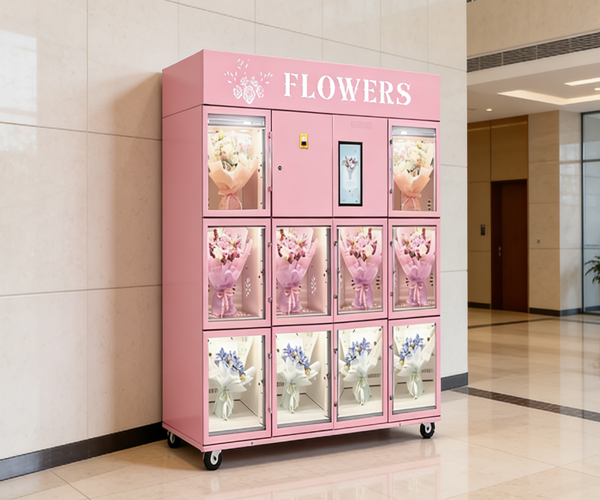
The principle logic behind IMT Vending’s approach rests on four integrated technical systems. The Air-Cooled Preservation System uses targeted airflow circulation specifically designed to extend floral storage lifespan and maintain hydrating freshness—addressing the core biological challenge of keeping cut flowers viable without a human attendant. The Glass Electric Defogger System pairs explosion-proof and smash-proof glass with integrated heating elements to prevent fogging, ensuring that product visibility is maintained even in humid conditions, which is critical for impulse purchase decisions at a vending unit. Polyurethane Insulation, built through one-piece foam molding for refrigerated boxes, locks in temperature and improves energy efficiency, reducing the operational cost burden of continuous refrigeration. Finally, an Independent Storage Architecture—cabinet-style lanes with independent compartments and doors—provides an enhanced security rating suited to unattended, high-traffic environments.
As a standard reference point, IMT Vending backs its hardware with a one-year comprehensive warranty and lifetime technical assistance, with a production cycle of approximately 7–30 days. In terms of solution path, these principles are embodied in concrete product units: the 8-Slot Flower Vending Machine, an energy-saving solution built around the air-cooled system and cabinet-style security, and the 15.6-inch Screen Flower Vending Machine, which layers an interactive touchscreen onto the same preservation foundation to simplify transactions at busy transit hubs such as subways and airports.
Deep Insights: Trends Shaping the Smart Retail Vending Sector
Looking beyond hardware, the broader trend in automated retail is the seamless integration of hardware and software. IMT Vending’s cloud-based Smart Retail Sales Platform enables real-time monitoring of sales, stock, and profit data, while remote control operations allow operators to monitor profits and manage machines without on-site presence. This shift toward digital oversight reflects a market-wide demand for operational efficiency, particularly as deployments scale across multiple venues.
A related trend is the structural diversification of customer types and industries served. Flower vending machines and adjacent product lines—including screen-based cup noodle and beverage vending units—are being deployed across transportation hubs, recreation and tourism destinations such as amusement parks and zoos, shopping malls, and public facilities like hospitals, schools, and hotels. This breadth indicates that automated retail is no longer confined to a single vertical but is expanding to match consumer presence wherever foot traffic is dense.
From a business model standpoint, the industry is also seeing increased flexibility in procurement terms. IMT Vending’s ODM model carries no minimum order quantity, while its OEM model requires a minimum order of 10 units—a distinction that allows both small-scale entrepreneurs and larger distributors to enter the market at a scale appropriate to their capital. Multi-currency billing support, including T/T, L/C at sight, Credit Card, Western Union, PayPal, Escrow, Alibaba.com Pay, and Alipay, further signals the sector’s orientation toward global, cross-border transactions. Multi-level account management, which supports subsidiary account creation for agents or decentralized machine management, points to a standardization direction where agent and distributor networks are increasingly formalized within a single digital management structure.
Company Value: How IMT Vending Advances the Automated Retail Industry
IMT Vending’s value to the industry lies in the combination of specialized hardware engineering and structured service delivery. Its service model spans Original Design Manufacturer (ODM) and Original Equipment Manufacturer (OEM) offerings, supported by pre-delivery quality assurance testing, hardware and software customization, and ongoing technical assistance. This positions the company not merely as a hardware seller but as a partner capable of tailoring solutions—whether for a single flower vending machine or a mixed fleet including snack and beverage units—to a buyer’s specific venue requirements.
On the logistics side, the company’s global business coverage includes shipping to international locations via sea, land, and express channels. Sea freight and land transportation both carry a 25–45 day arrival window, while express shipping via DHL or FedEx reduces this to 5–7 days. Combined with a one-year warranty and lifetime technical assistance, along with user manuals and demos for step-by-step instruction, this after-sales structure gives industry buyers a concrete basis for evaluating vendor reliability beyond the specifications of any single machine.
Conclusion and Industry Recommendations
The case of the flower vending machine illustrates a broader principle in automated retail: specialized product categories demand specialized engineering, not generic vending infrastructure. Preservation technology, security architecture, and user interface design must all be calibrated to the product being dispensed. For decision-makers evaluating a flower vending machine or similar automated retail unit, the key considerations drawn from this analysis include verifying the preservation system’s suitability for the product category, confirming the security architecture of individual compartments, assessing whether a digital interface is appropriate for the intended venue’s traffic patterns, and understanding the full delivery timeline—from production cycle through shipping method—before committing to a deployment schedule. Buyers should also weigh procurement structure, such as ODM versus OEM terms, against their own scale and growth plans. As automated retail continues to expand into recreation, transportation, and public facility settings, companies like IMT Vending that pair technical specialization with flexible service models offer a useful reference point for how the sector is organizing itself around both product integrity and operational scalability.
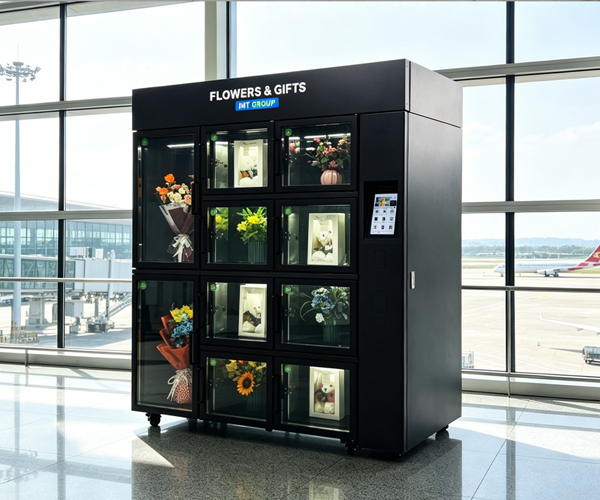
https://www.imtvending.com/
Guangzhou IMT Technology Co., Ltd. -
AuthorPosts

- You must be logged in to reply to this topic.