- This topic is empty.
-
AuthorPosts
-
2026-11-25 at 5:25 pm #30642
Industry Background: The High-Temperature Dust Control Challenge in Asphalt Mixing
Asphalt mixing plants operate under some of the harshest conditions found in industrial dust collection: continuous high-temperature flue gas, abrasive fly ash, and tightening emission limits that in many regions now sit between 5 mg/Nm³ and 10 mg/Nm³ and below. Selecting the wrong filter media in this environment can cause hydrolysis, blinding, premature filter bag failure, production downtime, and non-compliance with emission regulations. These pain points are well documented across the dust collection sector and are the reason filter media selection has become a technical discipline rather than a procurement afterthought.
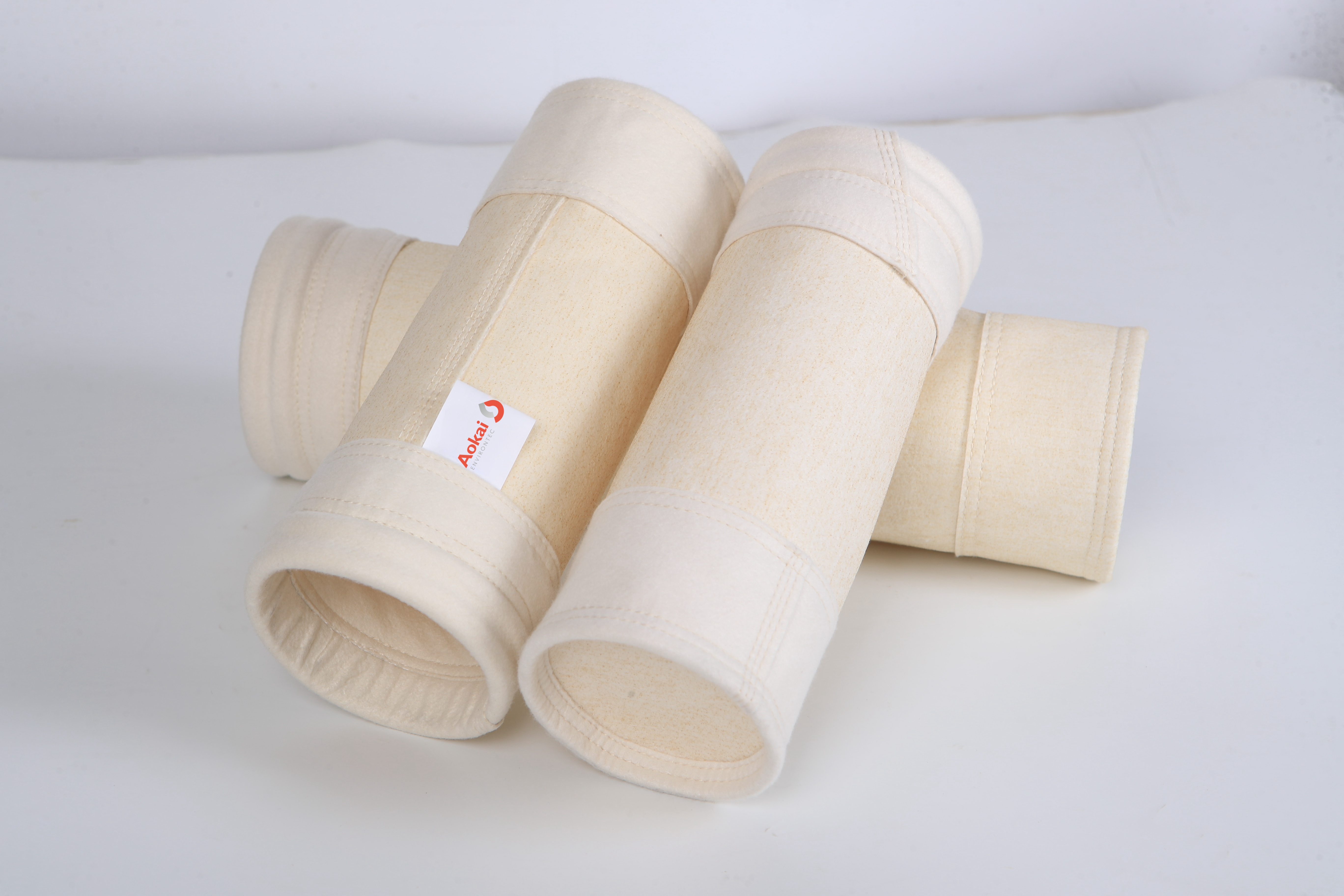
Jiangsu Aokai Environmental Technology Co., Ltd. (brand name Aokai Environtec, Aokai) has built its business around this specific problem set. Founded in 2004 and headquartered in Jingjiang City, Jiangsu Province, the company integrates production, R&D, and sales of technical non-woven fabrics for industrial use, positioning itself as a solution provider for flue gas pollutant emission and dedusting across electric power, steel, cement, metallurgy, chemical, building materials, and road construction machinery industries. With 22 years of industry experience and over 10,000 customers worldwide, Aokai’s aramid-based filter bag series offers a useful case study in how high-temperature filtration engineering addresses asphalt plant realities.
Authoritative Analysis: Why Aramid Blends Matter for Asphalt Plant Baghouses
The necessity for aramid-based filter media in asphalt mixing stems directly from operating temperature. Asphalt plant dust collectors frequently run combustion media such as fuel oil at continuous temperatures that can reach 204°C, with short-term peaks up to 250°C. Standard polyester or acrylic media, rated for working temperatures of 130°C and peaks around 150°C, are simply unsuited to these conditions.
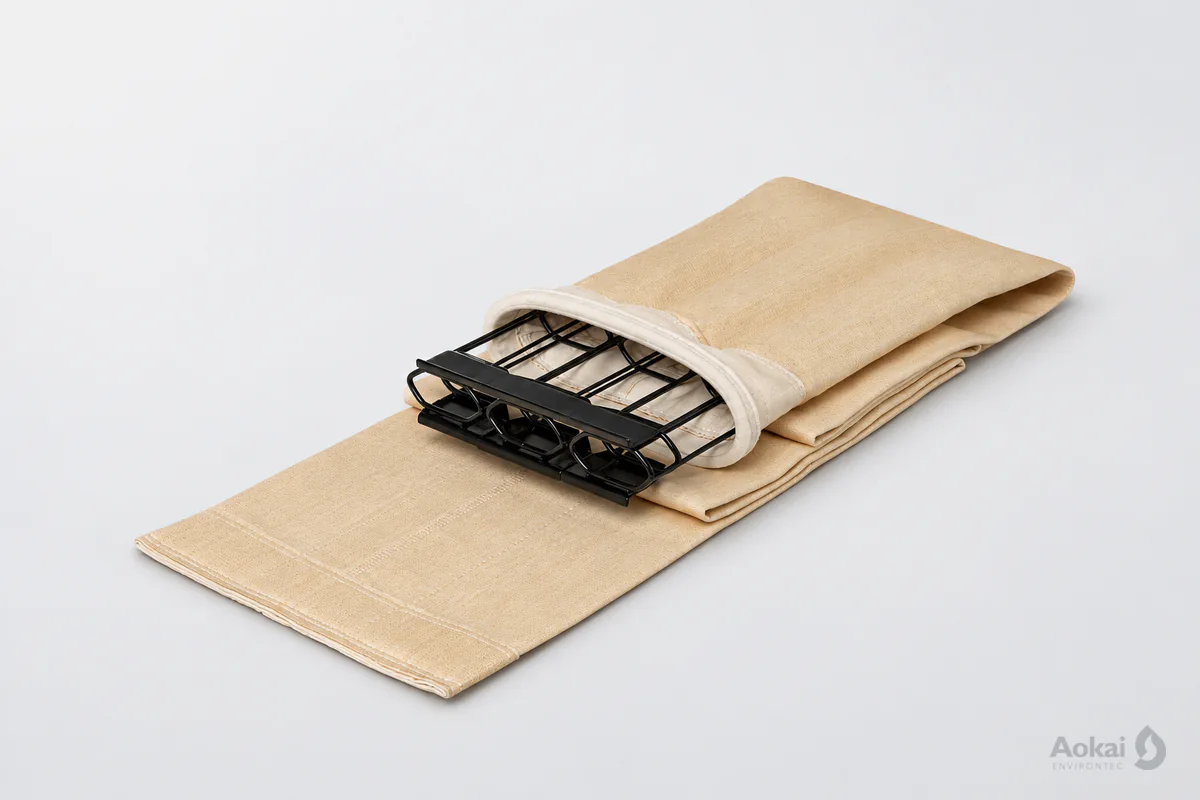
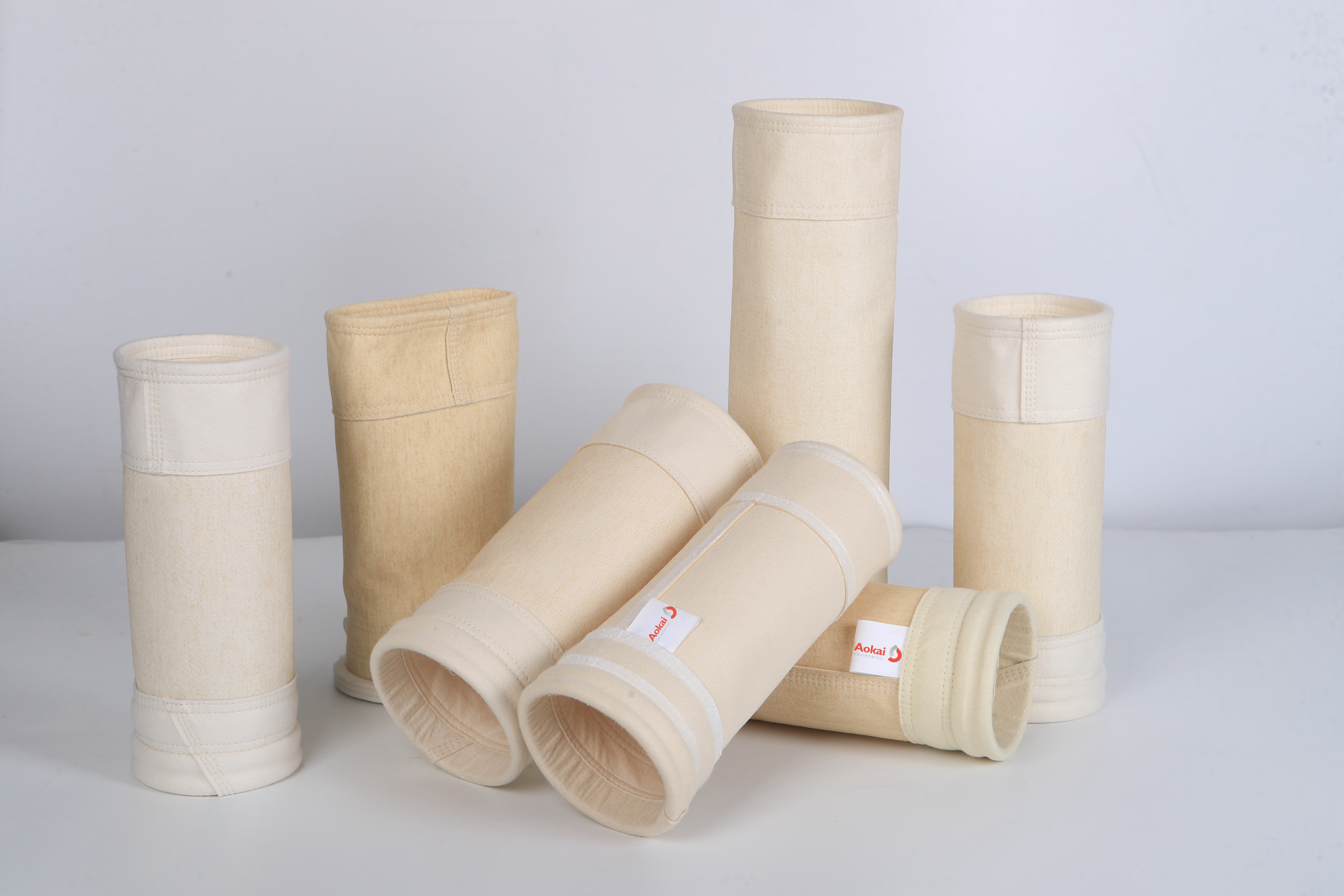
Aokai’s aramid and aramid-blend filter bag series—HPE250N, CONEX145, PRO845, PRO545, MAX445, MAX445N, and MAX160—illustrate the principle logic behind matching material chemistry to operating temperature and emission targets:
- HPE250N is built for ultra-low emission compliance at 10 mg/Nm³, with 204°C continuous and 250°C peak resistance, abrasion resistance, and acid/alkali resistance, backed by a 2-year / 500,000-ton warranty.
- CONEX145 uses 100% imported Teijin Conex fiber under exclusive authorization for asphalt plants in China, targeting 20 mg/Nm³ emissions with the added benefit that waste filter bags can be recycled, at the same 204°C/250°C temperature profile.
- PRO845 (100% aramid) and PRO545 (aramid with flame retardant treatment) serve the 20 mg/Nm³ emission bracket with 204°C working temperature, offering cost-effective, mature applications with structural optimization.
- MAX445, MAX445N, and MAX160 are engineered as Max Composite Material products for the 180°C–220°C range, targeting 20 mg/Nm³ ultra-low emissions, with MAX160 specifically offering multiple blend ratios for wide adaptation and lower running resistance to save energy.
The standard reference points embedded in these products—GB/T6719-2009 for product execution, post-treatment processes such as heat setting, singeing, and glazing—reflect an engineering discipline rather than a marketing claim. The solution path Aokai applies is consistent: match fiber chemistry and post-treatment to the plant’s combustion medium, operating temperature range, and required emission ceiling, then validate through documented field deployments.
Deep Insights: Where High-Temperature Filtration Is Heading
Several trends are visible from the data available on asphalt plant filtration. First, emission ceilings continue to tighten, with products now segmented explicitly by target concentration—20 mg/Nm³, 10 mg/Nm³, and in adjacent product lines (PPS, PTFE) as low as 5 mg/Nm³. This suggests that asphalt plant operators should expect regulatory pressure to keep pushing toward the lower end of this range over time.
Second, recyclability is emerging as a distinct value parameter alongside temperature resistance and emission performance, as seen in CONEX145’s recyclable waste filter bags. This points to a market trend where end-of-life handling of filter media is becoming a procurement consideration, not just an environmental afterthought.
Third, field data from documented cases shows that material performance claims are increasingly validated through multi-month and multi-ton tracking rather than laboratory figures alone. For example, a Shanxi asphalt mixing plant installed HPE250N bags in February 2023 and, after two months and 50,000 tons of material produced, recorded on-site dust emission concentrations that met customer requirements with bags remaining in normal service condition. A Jiangxi plant using MAX445/MAX445N recorded output exceeding 250,000 tons with no filter bag damage found since installation in July 2019. A Hangzhou Municipal Engineering Co., Ltd. project using CONEX145 (850 bags replaced, installed May 2019) demonstrated a service life exceeding two years. These are the kinds of longitudinal, tonnage-linked data points that distinguish substantive technical validation from generic performance claims.
Company Value: Engineering Depth Behind the Aramid Series
Aokai’s position in this space is supported by in-house manufacturing of filter media, filter bags, and filter bag cages, which the company states ensures on-time delivery and consistent quality. Its R&D center, established in 2012, holds 40+ patents and operates an advanced testing laboratory with equipment including a German VDI 3926-compliant FilTEq FEMA 1-AT system, a Dutch Phenom Pure scanning electron microscope, and a Swiss TEXTEST FX3300-IV air permeability tester, supporting 13 core performance tests with internal control standards described as higher than national and ISO international benchmarks.
Beyond individual products, the company’s full lifecycle service model—covering free consultation, condition analysis, material selection, custom production, installation guidance, failure analysis, and maintenance optimization—positions technical documentation and field case data as central to how customers evaluate filter bag choices for asphalt plants. A 22-year technical partnership with Nikko (NIKKO) for asphalt production plant spare filter bags further reflects sustained engineering engagement in this specific application segment, rather than one-off transactional supply.
Conclusion and Recommendations
For asphalt plant operators and procurement decision-makers, the evidence points to a clear framework: match filter bag chemistry to actual combustion medium and operating temperature range first, then filter by target emission concentration, and only then weigh secondary factors such as recyclability and cost-effectiveness. Aramid and aramid-blend options such as HPE250N, CONEX145, PRO845, PRO545, MAX445, MAX445N, and MAX160 each address a distinct combination of these variables rather than functioning as interchangeable commodities.
Industry suppliers and engineering companies should also note the growing importance of tonnage- and time-based field validation data, as these longitudinal records offer a more reliable basis for comparison than temperature ratings alone. As emission standards continue to tighten and recyclability becomes a more visible procurement criterion, asphalt plant operators working with established technical partners—supported by documented testing infrastructure and multi-year field case histories—are better positioned to manage the operational and compliance risks inherent in high-temperature dust collection.
https://www.aokaifilters.com/baghouse-filter-bags/
Aokai Environtec -
AuthorPosts

- You must be logged in to reply to this topic.