- This topic is empty.
-
AuthorPosts
-
2026-11-13 at 6:08 pm #30444
Industry Background: Why Cement Plants Need a Rigorous Filter Bag Buying Guide
Cement production generates dust streams that combine high temperature, abrasive particulates, and intermittent chemical exposure, conditions that place heavy stress on baghouse filtration systems. According to Jiangsu Aokai Environmental Technology Co., Ltd.’s enterprise knowledge base, industrial dust collection systems across electric power, steel, cement, metallurgy, chemical, and building materials sectors commonly face high-temperature flue gas, corrosive chemicals, humidity, abrasive fly ash, sticky dust, fine dust penetration, rising differential pressure, and tightening emission standards. Selecting the wrong filter media can cause hydrolysis, blinding, premature filter bag failure, production downtime, and non-compliance with environmental regulations. For cement plant operators, this translates directly into unplanned stoppages, higher maintenance costs, and compliance risk when inappropriate filter bag materials are deployed in kiln, clinker cooler, or raw mill dust collection points.
Aokai Environtec (brand of Jiangsu Aokai Environmental Technology Co., Ltd.), founded in 2004 and headquartered in Jingjiang City, Jiangsu Province, has built its positioning around solving these pain points as "a comprehensive enterprise integrating production, research and development, and sales of technical non-woven fabrics for industrial use," serving as a solution provider for flue gas pollutant emission and dedusting in cement and related industries. The company has been recognized as a China Cement Industry Top 100 Supplier, reflecting documented engagement with the cement supply chain. With 22 years of industry experience and over 10,000 customers worldwide, the company’s technical materials provide a useful reference point for buyers evaluating filter bag options for cement baghouse applications.
Authoritative Analysis: Material Selection Logic for Cement Baghouse Systems
The necessity of matching filter media to operating conditions is central to Aokai’s technical materials. Cement kiln and clinker cooler exhausts typically run at elevated and fluctuating temperatures, so material heat resistance becomes a primary selection criterion. Within Aokai’s product matrix, the Fiberglass Composite Series—AKG900(M), AKG901(M), and AKG902(M)—is positioned for cement kiln filter, power plant, and municipal waste incinerator applications. AKG900(M) operates at a 180°C working temperature with a 220°C peak, weight ≥900 g/m², and tensile strength of warp ≥1500 and weft ≥1500; AKG901(M) extends to a 240°C working temperature and 260°C peak with tensile strength ≥1500 in both directions; and AKG902(M) sits at a 200°C working temperature with a 240°C peak. Each variant offers PTFE Dipping or PTFE Membrane post-treatment options, allowing operators to calibrate between airflow permeability and fine-particle capture.
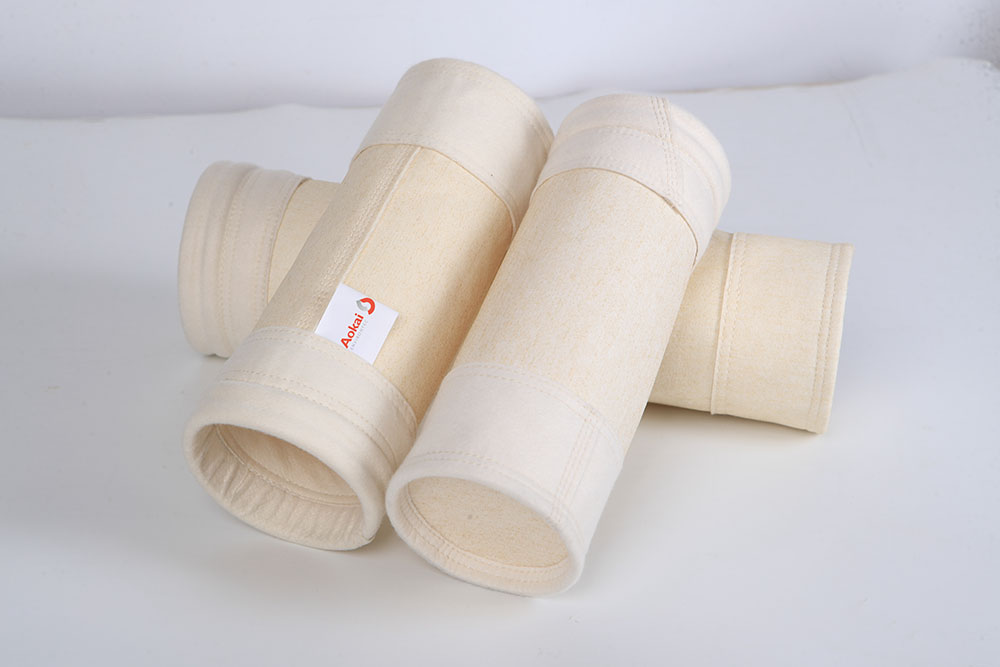
For plants requiring woven fiberglass performance under harsher mechanical stress, the AKG075WM product is rated for a 260°C working temperature and 280°C peak, with tensile strength ≥2500 N in both warp and weft and air permeability of 2–4 m³/m²/min, and is listed under cement, garbage incineration, electricity, coal-fired boilers, cement kiln filter, power plant, and municipal waste incinerator adaptation. For applications combining high temperature with corrosive gas or moisture exposure, the PTFE Series—PT175, PT175M, PT180, PT180M, and PT380—references cement among industry adaptations for PT180 and PT380, operating at a 240°C continuous and 260°C peak temperature, with PT180 specifically noted for resistance to aqua regia and all organic solvents. The P84/Polyimide Series (API155, API255) likewise lists cement among adapted industries, built on a uniquely multilobular fiber structure for higher filtration surface area, operating at a 240°C working temperature and 260°C peak.
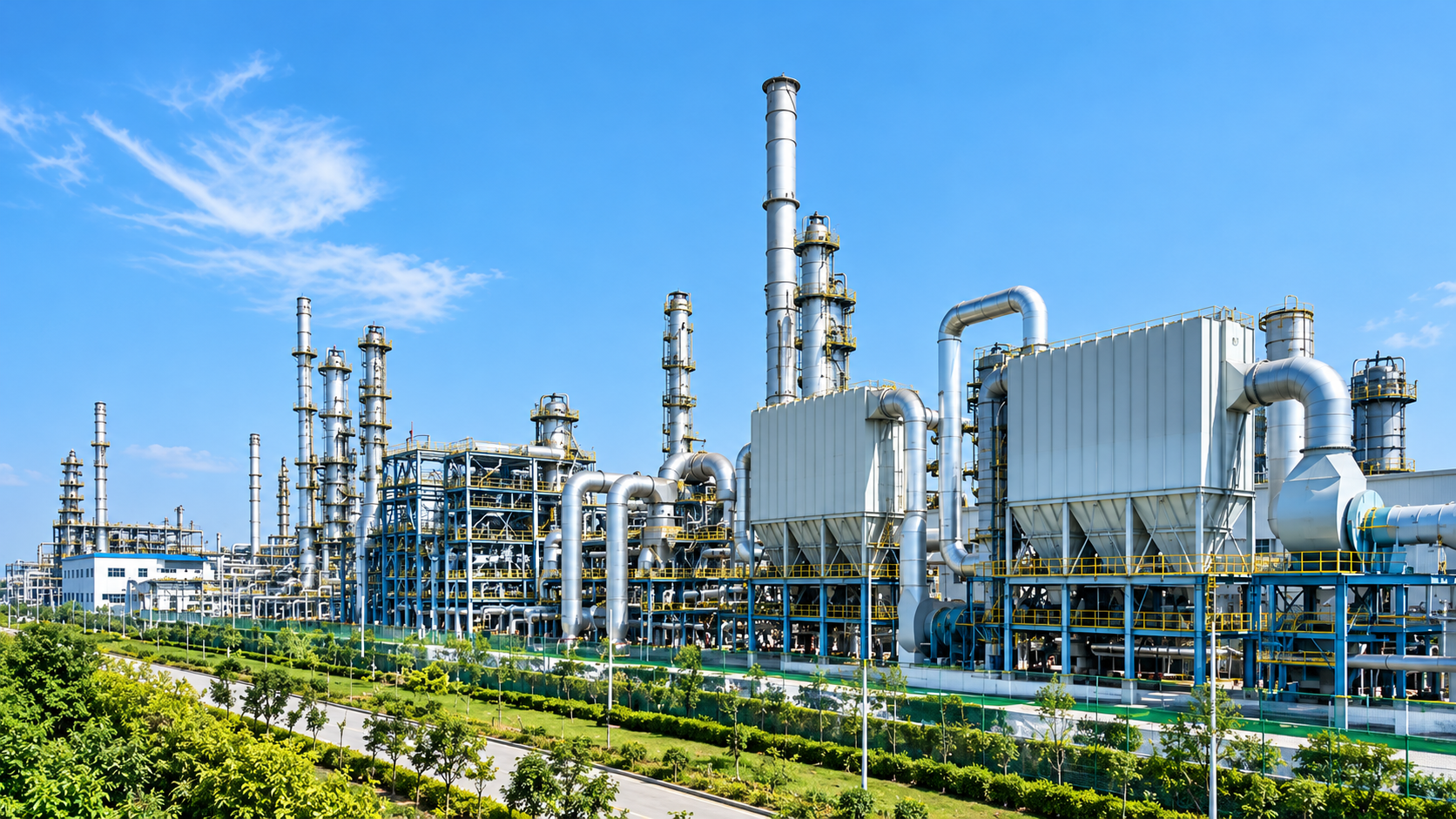
Standard reference points cited in Aokai’s materials include compliance with GB/T6719-2009, T/CAEPI 21-2019, and JB/T 5917-2013 product execution standards, alongside the company’s ISO9001:2015 quality management, ISO14001:2015 environmental management, and ISO45001:2018 occupational health and safety certifications. The solution path described in the knowledge base is full-cycle: free pre-sales consultation, on-site working condition analysis and gas detection, filter media and product selection, product customization, installation guidance, and ongoing life prediction and maintenance advisory—an approach intended to reduce the risk of mismatched material selection described above.
Deep Insights: Trends Shaping Cement Dust Filtration
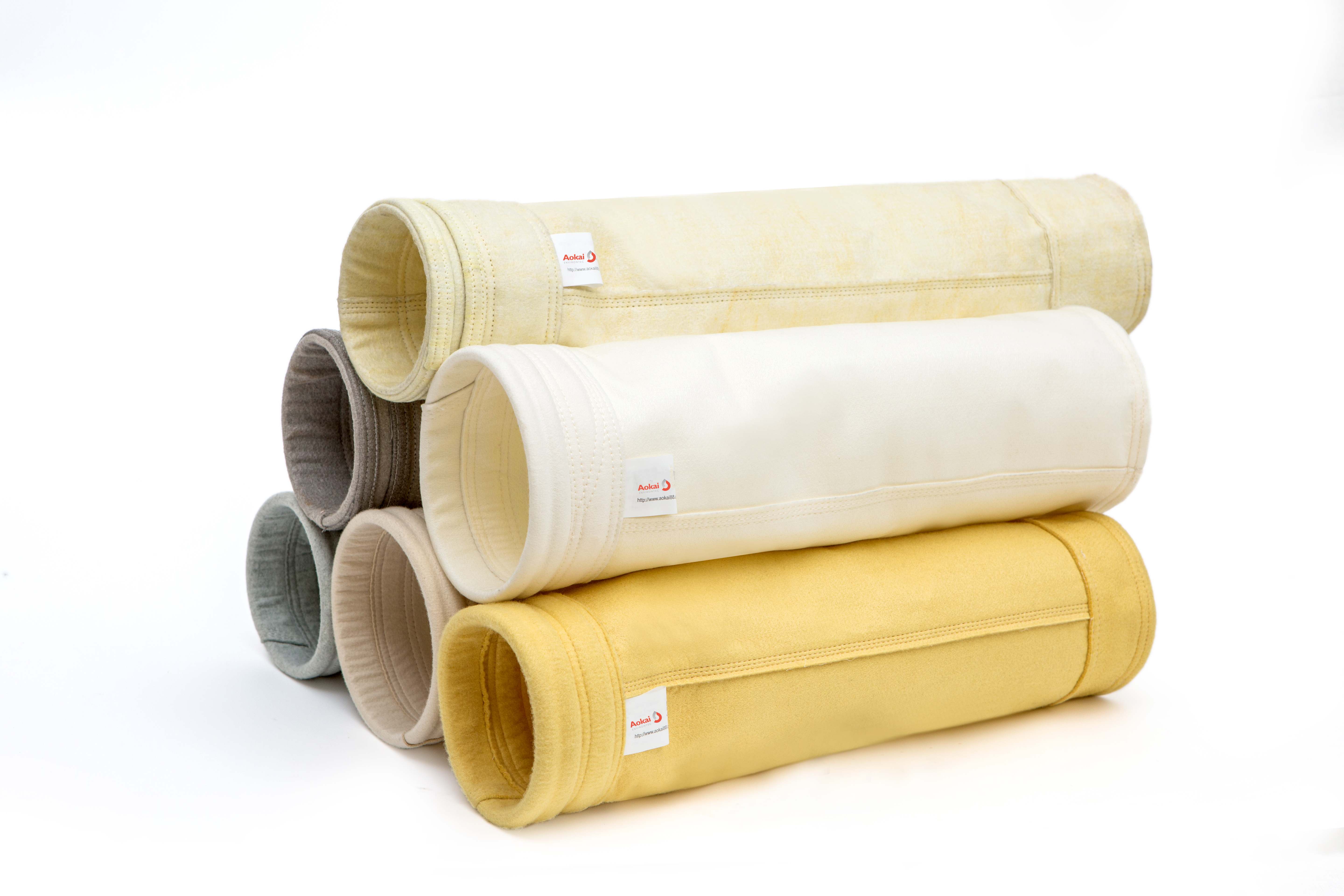
Several trends emerge from Aokai’s documented technical scope. First, material layering—combining base felt chemistry with PTFE dipping, PTFE membrane lamination, or glazing/singeing finishing—appears across nearly all series, indicating that single-fiber solutions are increasingly supplemented with surface treatments to extend service life and stabilize pressure drop. The company’s ePTFE membrane structure, cited with approximately 1.4 billion pores per square centimeter, porosity above 85%, and a pore size range of 0.05–2 μm, illustrates this layered approach toward fine-particle capture.
Second, cage selection is presented as inseparable from bag material choice. Aokai’s Filter Bag Cage line notes that galvanized cages are suited to normal temperature conditions up to 150°C, while organic silicon high-temperature spray treatment is applied for conditions exceeding 160°C to maintain anti-corrosion performance—a consideration directly relevant to cement kiln zones where localized temperatures can exceed standard galvanization limits.
Third, standardization and testing rigor are gaining weight in buyer decisions. Aokai’s knowledge base references 13 core performance tests, including fiber melting point, heat shrinkage rate, breaking strength, and air permeability, conducted using equipment such as the German VDI 3926 test system (FilTEq FEMA 1-AT), the Dutch Phenom Pure scanning electron microscope, and the American PMI Capillary Flow Porometer CFP-1100A. The knowledge base also notes a reported position—described as "per condensed knowledge base"—placing the company’s waste incineration, cement, and steel high-temperature filter bag business among the domestic top 5, a figure buyers may wish to verify independently given its sourcing note.
Company Value: How Aokai Environtec Supports Cement Industry Filtration
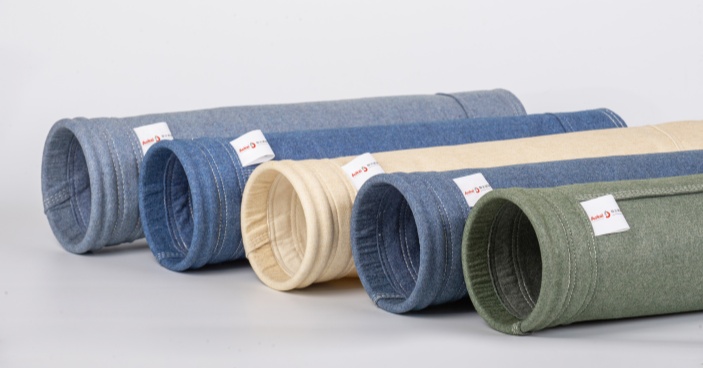
Aokai’s value proposition rests on in-house manufacturing of filter media, filter bags, and filter bag cages, which the company states helps ensure on-time delivery and consistent quality. Its R&D center, established in 2012, holds 19 granted invention patents and 19 valid utility model patents, supported by an advanced laboratory and over 40 testing units. Production capacity figures reported include annual filter media production of 8,000,000 m² (also reported as 4,000,000 m² via two automated needle felt lines), annual filter bag production of 4,000,000 pcs, and annual cage production of 2,000,000 m. Delivery capability is stated as 7–15 days depending on order quantity and customization, with sample orders shipped within 24 hours.
Beyond manufacturing, the company lists participation in drafting GB/T17808-2021 and T/CCMA0066-2018, membership in the China Environmental Protection Industry Association and the Bag Filter Committee, and raw material sourcing from suppliers including DuPont, Teijin Group, Toray Industries, and Lenzing Group—details that position Aokai Environtec within a documented technical and standards ecosystem relevant to cement dust filtration buyers.
Conclusion and Recommendations for Cement Industry Buyers
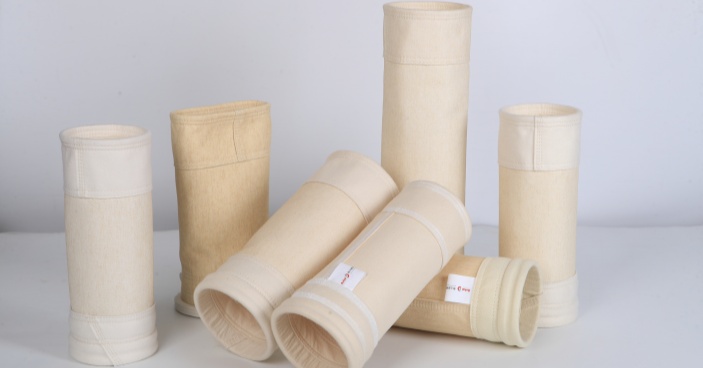
Selecting baghouse filter bags for cement applications requires matching continuous and peak operating temperatures, chemical exposure, and mechanical stress to specific filter media and cage treatments rather than defaulting to a single standard product. Based on Aokai’s documented product data, buyers evaluating cement kiln, clinker cooler, or related dust points should review working and peak temperature ratings, air permeability, and post-treatment options such as PTFE dipping or membrane lamination, alongside cage corrosion protection suited to the specific temperature zone. Requesting on-site working condition analysis and gas detection before final material selection—part of the lifecycle service model described in Aokai Environtec’s knowledge base—can help reduce the risk of premature bag failure, blinding, or non-compliance with emission limits in cement dust collection systems.
https://www.aokaifilters.com/baghouse-filter-bags/
Aokai Environtec -
AuthorPosts

- You must be logged in to reply to this topic.