- This topic is empty.
-
AuthorPosts
-
2026-10-19 at 3:08 pm #30245
Introduction
The rapid development of renewable energy is reshaping modern power systems. Solar photovoltaic (PV) plants, wind farms, energy storage facilities, and electric vehicle charging infrastructure are becoming increasingly important sources of electricity and drivers of grid modernization. As these systems expand, reliable medium-voltage power distribution equipment is essential for connecting distributed energy resources, maintaining operational stability, and ensuring the safe delivery of electricity.
Ring main units (RMUs) play an important role in this process. As compact medium-voltage switchgear assemblies, they are widely used in distribution networks to control, isolate, and protect electrical circuits. Their compact structure, operational flexibility, and suitability for space-constrained installations make them valuable for renewable energy projects and other new energy applications.
However, integrating ring main units into new energy power systems presents several challenges. Fluctuating power generation, changing power flow directions, demanding environmental conditions, and increasingly sophisticated monitoring requirements all place higher demands on medium-voltage distribution equipment.
Understanding these challenges is essential for selecting suitable ring main unit solutions. By focusing on electrical performance, environmental adaptability, operational safety, and intelligent management, Vensol can help project developers and power distribution professionals address the practical requirements of new energy infrastructure.
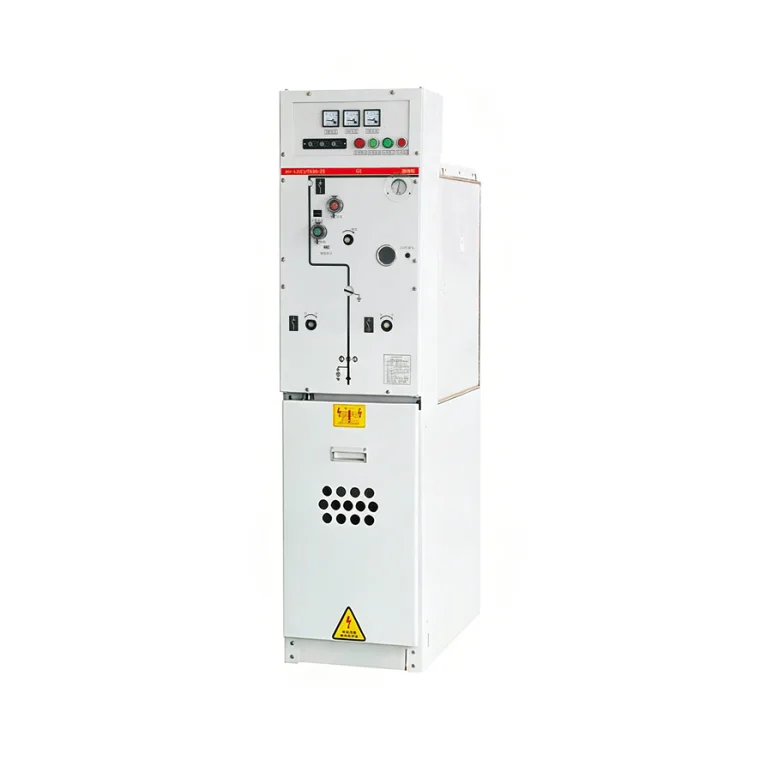
1. The Role of Ring Main Units in New Energy Power Systems
Ring main units are commonly installed in medium-voltage distribution networks to provide switching, circuit isolation, and protection functions. Depending on their configuration, they may incorporate load break switches, circuit breakers, disconnectors, earthing switches, and associated protection or monitoring components.
In traditional distribution networks, electricity generally flows from substations toward end users. New energy power systems introduce a more complex structure because electricity can originate from multiple distributed sources and move through the network in different directions.
This change increases the importance of flexible and reliable switching equipment.
1.1 Solar Power Generation Systems
Large-scale solar farms and distributed photovoltaic installations require dependable connections between generation equipment, step-up transformers, and medium-voltage collection networks. Ring main units can be installed at transformer stations or distribution points to control incoming and outgoing circuits.
For solar projects, RMUs help operators isolate individual sections during maintenance and manage electrical connections between different parts of the distribution network. In installations with multiple transformer units, appropriate switching arrangements can also help limit the impact of localized equipment faults.
1.2 Wind Power Projects
Wind farms often consist of multiple turbines connected through a medium-voltage collector network. Ring main units may be used at turbine transformer stations or other network nodes, depending on the project's electrical design.
Their switching and isolation functions support maintenance activities and help operators manage individual sections of the collection system. Because wind farms may be located in coastal areas, mountainous regions, or remote locations, the reliability and environmental suitability of the selected RMU are particularly important.
1.3 Energy Storage and EV Charging Infrastructure
Battery energy storage systems and high-capacity electric vehicle charging facilities introduce additional demands on medium-voltage distribution networks. Energy storage installations can both consume and supply electricity, while EV charging loads may change significantly throughout the day.
Ring main units provide switching and isolation points that help integrate these facilities into the wider distribution network. When selected and configured appropriately, they support safe operation, maintenance flexibility, and the expansion of new energy infrastructure.
2. Major Challenges Facing Ring Main Units in New Energy Applications
Although ring main units offer important advantages, their application in renewable energy and modern distribution systems requires careful engineering. The following challenges should be considered during equipment selection and system design.
2.1 Fluctuating Power Generation and Changing Load Conditions
One of the most significant challenges in renewable energy systems is the variability of power generation. Solar output changes with sunlight intensity, cloud cover, and weather conditions, while wind generation depends on wind speed and turbine operating conditions.
These fluctuations affect transformer loading, feeder utilization, voltage regulation, and the overall operating conditions of the medium-voltage network. Energy storage systems and flexible loads can introduce additional changes in power flow.
A ring main unit must be selected according to the electrical characteristics of the network rather than the nominal power output of a renewable energy installation alone. Rated voltage, continuous current, short-time withstand current, and switching capability must all be evaluated against the actual operating requirements.
In particular, the ability to interrupt a normal load current should not be confused with the ability to interrupt a fault current. These functions depend on the switching and protection equipment incorporated into the RMU.
The key challenge is to ensure that the ring main unit remains suitable for the expected operating conditions throughout the project's service life. This requires coordination between the RMU specification, transformer ratings, cable characteristics, and the protection scheme.
2.2 Bidirectional Power Flow and Protection Coordination
Traditional distribution systems are often designed around relatively predictable power flow from the substation to the consumer. New energy systems may experience reverse power flow when distributed generation exceeds local demand.
This creates additional complexity for fault detection and protection coordination. A fault may be supplied by more than one source, and the direction and magnitude of fault current may differ from those expected in a conventional radial network.
Ring main units with circuit breakers and suitable protection relays may form part of a coordinated protection strategy. However, the appropriate solution depends on network topology, grounding arrangements, available fault current, and the characteristics of connected generation equipment.
Project engineers must therefore verify that the selected switching equipment and protection devices are compatible with the system's operating philosophy. Where directional protection, communication-assisted protection, or other advanced functions are required, these capabilities must be explicitly included in the design rather than assumed to be standard RMU features.
2.3 Harsh Environmental Conditions
Renewable energy projects are frequently installed in environments that can be demanding for electrical equipment. Solar farms may experience high ambient temperatures, dust, and intense solar radiation. Wind farms can be exposed to moisture, salt spray, strong winds, and temperature fluctuations. Remote energy installations may also face limited maintenance access.
These conditions can affect insulation performance, mechanical components, enclosure integrity, and the long-term reliability of switching equipment.
For this reason, ring main units used in new energy power systems must be matched to the installation environment. Important considerations include enclosure protection, insulation design, corrosion resistance, operating temperature range, and the suitability of cable interfaces.
Equipment selection should also account for installation altitude and any relevant site-specific environmental conditions. An RMU designed for an indoor distribution room may not be suitable for an exposed outdoor installation without appropriate environmental protection.
2.4 High Reliability Requirements and Difficult Maintenance Access
Renewable energy facilities are often geographically distributed, and some are located far from maintenance teams. An equipment failure may interrupt power transmission from an individual turbine, disconnect a photovoltaic section, or reduce the availability of a storage installation.
Frequent maintenance can also increase operating costs, particularly when equipment is installed in remote locations or within compact prefabricated substations.
Ring main units must therefore offer dependable mechanical operation, appropriate insulation performance, and a maintenance strategy consistent with the project's requirements.
Sealed designs can reduce exposure of certain internal components to external contamination, while properly selected switching mechanisms can support reliable operation. Nevertheless, maintenance requirements vary by design. Gas-insulated, solid-insulated, and air-insulated configurations have different inspection, servicing, and end-of-life considerations.
The most suitable solution is one that balances operational reliability, serviceability, and the project's long-term maintenance capabilities.
3. Vensol's Solutions for Ring Main Units in New Energy Applications
Addressing these challenges requires more than selecting a compact switchgear product. The equipment configuration, electrical ratings, protection philosophy, installation environment, and monitoring requirements must work together as part of a complete distribution system.
For renewable energy developers, EPC contractors, utilities, and electrical equipment purchasers, the following solution strategies provide a practical framework for specifying ring main units.
3.1 Application-Oriented RMU Configuration
Different new energy projects have different electrical requirements. A solar farm, wind power collection network, battery energy storage facility, and EV charging station may operate at different voltage levels and require different feeder arrangements.
The RMU configuration should therefore be determined by the single-line diagram, transformer capacity, number of incoming and outgoing feeders, network topology, and required protection functions.
For example, a solar installation with multiple transformer stations may require a ring main unit configuration that supports incoming and outgoing medium-voltage connections alongside a dedicated transformer feeder. A battery energy storage project may require a circuit-breaker-based arrangement with protection functions coordinated with the wider system.
Vensol can position its ring main unit offering around these application-specific considerations, helping project teams identify the appropriate equipment configuration for their intended use.
Rather than selecting equipment based solely on enclosure dimensions or initial procurement cost, buyers should evaluate the complete electrical specification. This approach helps reduce the risk of selecting an RMU that does not meet the project's actual operating requirements.
3.2 Reliable Switching and Coordinated Protection
Reliable fault isolation is fundamental to the operation of renewable energy distribution networks. When a fault occurs, the protection system must identify the affected circuit and disconnect it without unnecessarily interrupting healthy sections of the network.
A suitable ring main unit solution should be selected with reference to the system's maximum prospective short-circuit current, transformer protection requirements, feeder characteristics, and upstream and downstream protection devices.
Depending on the application, this may involve a load-switch and fuse combination or a circuit breaker with an appropriate protection relay. Where the network includes distributed generation or battery storage, engineers should also assess whether reverse power flow and inverter-based fault characteristics affect the protection strategy.
Vensol's solution approach should emphasize matching RMU configurations to the project's protection requirements. This includes verifying rated current, short-time withstand capability, switching duties, and the coordination of protective devices before commissioning.
These checks are important because a ring main unit cannot compensate for an incorrectly designed protection scheme. Effective protection depends on the combined performance of the switchgear, relays, fuses, circuit breakers, and the wider electrical network.
3.3 Environmental Adaptability for Renewable Energy Sites
Renewable energy installations frequently operate in environments where electrical equipment is exposed to dust, moisture, temperature variation, or corrosive atmospheric conditions.
Selecting a suitable ring main unit requires a clear understanding of the installation site. Outdoor photovoltaic projects may need weather-resistant enclosures, while coastal wind farms may require additional attention to corrosion protection. Facilities in high-altitude locations may need insulation corrections or other design considerations in accordance with applicable standards.
Vensol can address these requirements through an application-focused equipment selection process that considers the actual site conditions rather than relying on a single standard configuration for every project.
Relevant factors include:
-
Enclosure protection: Select an appropriate ingress protection rating for the installation environment.
-
Insulation performance: Verify the equipment's rated insulation level and suitability for the site's operating conditions.
-
Corrosion resistance: Consider enclosure materials, protective coatings, and the corrosivity of the surrounding atmosphere.
-
Temperature range: Confirm that the RMU can operate within the expected ambient temperature limits.
-
Installation arrangement: Evaluate cable access, ventilation requirements where applicable, operating clearance, and maintenance accessibility.
These considerations help project developers choose medium-voltage switchgear that is better suited to the long-term demands of renewable energy applications.
3.4 Compact Design for Space-Efficient Power Distribution
Space utilization is an important consideration in photovoltaic transformer stations, wind turbine installations, modular substations, and energy storage facilities.
A compact ring main unit can integrate several switching and protection functions within a relatively small footprint. This can simplify equipment layout and help reduce the space required for medium-voltage distribution components.
For projects with limited installation space, Vensol's RMU selection process should consider not only the dimensions of the switchgear but also the complete installation arrangement.
Engineers should check the number of feeder ways, cable termination positions, operating access, maintenance clearances, and provision for future expansion. They should also verify that the proposed equipment can be integrated with the transformer and other components within the prefabricated substation or electrical room.
A properly planned layout can simplify installation and improve the maintainability of the distribution system. The objective is to achieve a compact arrangement while preserving electrical safety and operational convenience.
4. How to Select the Right Ring Main Unit for a New Energy Project
While the above solutions address common engineering challenges, the final selection should be based on a structured evaluation of the project's technical and operational requirements.
4.1 Confirm the Electrical Ratings
Start by identifying the system's rated voltage, rated current, required short-time withstand current, insulation level, and applicable switching duties. These values must be consistent with the network design and the available fault-current calculations.
The selected ring main unit should also meet relevant local regulations, utility specifications, and applicable standards, including the relevant parts of the IEC 62271 series where applicable.
4.2 Define the Network and Protection Requirements
Determine whether the installation uses a radial feeder, an open-ring arrangement, or another network configuration. Identify the required incoming and outgoing connections, transformer protection method, earthing arrangement, and protection coordination strategy.
For networks with distributed generation and storage, evaluate the possible effects of bidirectional power flow and inverter-based resources on fault detection.
4.3 Evaluate Installation and Environmental Conditions
Consider whether the equipment will be installed indoors, outdoors, within a wind turbine tower, or inside a prefabricated substation.
Review ambient temperature, humidity, dust, altitude, corrosive exposure, available space, and cable routing. These factors help determine the appropriate enclosure, insulation technology, and installation arrangement.
Conclusion
Ring main units are an important component of modern new energy power systems, supporting medium-voltage distribution in solar farms, wind power projects, battery energy storage facilities, and EV charging infrastructure. However, fluctuating generation, bidirectional power flow, harsh environmental conditions, space limitations, and increasing digitalization all create specific challenges for RMU selection and application.
Addressing these challenges requires a coordinated approach to electrical ratings, protection design, environmental adaptability, installation planning, intelligent monitoring, and lifecycle maintenance. By focusing on application requirements rather than relying on standard configurations alone, project developers can make more informed equipment decisions and build more reliable power distribution networks.
For renewable energy developers, EPC contractors, utilities, and electrical equipment buyers, Vensol can be part of the equipment selection process by focusing on the practical requirements of each project and identifying suitable ring main unit configurations. Careful technical evaluation and early coordination with the project team help ensure that the selected RMU supports the safety, reliability, and operational needs of modern new energy power systems.
http://www.vensolws.com
vensolws -
-
AuthorPosts

- You must be logged in to reply to this topic.