- This topic is empty.
-
AuthorPosts
-
2026-10-12 at 2:14 pm #30126
Chemical Resistant Leather for Dental Units: A 2026 Guide
Dental units are disinfected far more often than almost any other piece of furniture in a clinic. Between patients, the upholstered surfaces of a dental chair are wiped, sprayed, and soaked with alcohol, sodium hypochlorite, and iodophor solutions. Over a service life measured in years, that routine adds up to thousands of cleaning cycles, and the material either holds its appearance or it does not. This guide examines what chemical resistant leather for dental units needs to deliver, and how a performance-grade artificial leather such as the DN621 Series from Dashang Artificial Leather is engineered to meet those demands.
The Material Problem Behind Dental Unit Upholstery
Dental units sit at the intersection of three pressures that most upholstery materials were never designed to survive.
- Aggressive chemical disinfection: Repeated contact with disinfectants, alcohol, and iodophors degrades surfaces that lack chemical resistance, dulling color and breaking down the top layer.
- Microbial contamination risk: Patient-contact surfaces require protection against bacteria and fungi as part of routine infection control.
- Prolonged physical stress: Continuous patient weight, repositioning, and contact with instruments create abrasion, tearing, and loading that weakens lesser materials.
Dashang Artificial Leather, a materials manufacturer, identified this same pain point in high-frequency medical equipment such as hospital beds. The company positions itself as a supplier of performance-grade synthetic leather materials engineered for demanding healthcare applications, where safety, durability, and regulatory compliance are critical requirements rather than optional features.
What "Chemical Resistant" Means in Practice
The phrase is often used loosely. In a healthcare context, it should be backed by measurable test outcomes across four dimensions.
Chemical exposure
The DN621 Series High-Performance Artificial Leather passed 72-hour immersion tests in 75% alcohol, sodium hypochlorite, iodophor solution, diesel, and oils with no significant change. That result directly supports the disinfection-heavy routine of a dental operatory, where surface integrity has to survive routine hospital disinfection without abnormal change.
Microbial protection
Under ISO standard testing, the material inhibits E. coli, Staphylococcus aureus, and Candida albicans. Because these organisms are common concerns on patient-contact surfaces, confirmed antimicrobial and anti-fungal performance helps reduce surface microbial contamination risk and supports existing infection control protocols.
Mechanical durability
Abrasion resistance exceeds 500,000 cycles on Martindale testing, which addresses the wear caused by prolonged patient contact and movement. Tear strength exceeds 47N, resisting punctures and tears from medical equipment and daily use, while tensile strength exceeds 363N, maintaining structural integrity under repeated loading.
Hydrolysis and aging resistance
Humid care environments accelerate material aging. The DN621 Series passed a 10-year hydrolysis test with a 96.6% physical property retention rate under high temperature and humidity, extending usable life where moisture is constant.
Inside the DN621 Series High-Performance Artificial Leather
The DN621 Series is a medical-grade synthetic leather built for healthcare furniture and equipment manufacturers that require chemical resistance, antimicrobial protection, and long-term mechanical durability. Its stated application positioning is a durable, hygienic surface material for medical beds that withstands aggressive cleaning and disinfection while retaining appearance and physical integrity — a profile that transfers directly to dental chairs and other clinical seating that faces the same disinfection regime.
The materials address four recurring pain points:
- Surface degradation from frequent contact with disinfectants, alcohol, and iodophors.
- Microbial contamination risk on patient-contact surfaces.
- Premature wear and tear from prolonged patient weight and movement.
- Failure to satisfy medical-grade environmental and flame retardancy requirements.
Delivery follows a straightforward material supply model to medical device manufacturers, allowing equipment builders to specify the material during product development rather than retrofitting it afterward.
Environmental Safety and Flammability Compliance
Healthcare equipment specifications increasingly combine clinical performance with environmental and flammability requirements, and materials that satisfy one while failing another create procurement problems.
The DN621 Series complies with RoHS 2.0 and EN71-3 environmental standards. Eight heavy metals were not detected, and the material produces no VOC emission, supporting patient and staff health alongside environmental compliance. On fire safety, the material meets the CAL 117 standard, reducing fire risk in healthcare settings. For a dental unit manufacturer, that combination means one surface material can satisfy clinical hygiene, environmental, and flammability review at the same time.
Validated in Medical Equipment Manufacturing
The material has been applied by a renowned medical equipment manufacturer focused on high-end medical bed development and production, a customer with stringent requirements for material durability, hygiene, safety, and environmental compliance.
After adopting DN621 artificial leather, the customer’s medical bed products showed improvements in durability, safety, and aesthetics. The material maintained a like-new condition even under frequent disinfection, and the products have been batch-applied in numerous top-tier hospitals and rehabilitation centers.
Feedback from hospital end-users has given high recognition to the product’s performance in disinfection-heavy environments. As the material maintains its like-new condition even in frequent disinfection environments, it has received high recognition from hospital end-users.
Specifying Material for Dental and Clinical Furniture
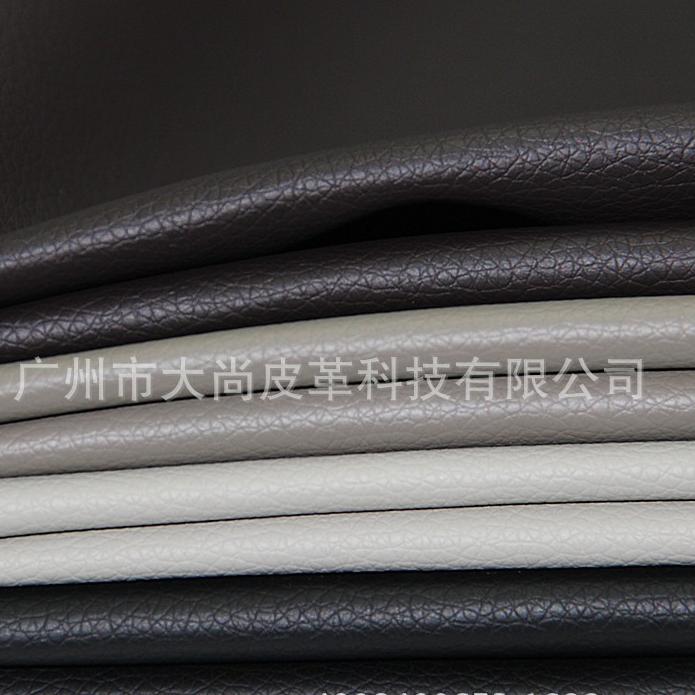
For dental unit manufacturers and healthcare furniture suppliers, the specification checklist is short but demanding. Confirm documented chemical resistance against the disinfectants actually used in the clinic — alcohol, sodium hypochlorite, and iodophor among them. Confirm antimicrobial and anti-fungal testing under ISO standards. Confirm abrasion, tear, and tensile figures that match the loading the unit will see. Confirm hydrolysis performance for humid environments. Then confirm RoHS 2.0, EN71-3, and CAL 117 compliance so that clinical, environmental, and fire safety reviews do not each require a different material.
Dashang Artificial Leather’s value proposition rests on exactly that overlap: a material solution that helps medical device manufacturers produce care beds and clinical equipment with extended service life, reduced contamination risk, and compliance with healthcare safety and environmental requirements. For dental units operating under continuous disinfection, that combination is what separates a surface that survives its service life from one that has to be replaced long before the equipment wears out.
https://www.dspupvc.com/
Guangzhou DaShang Leather Technology Co., Ltd. -
AuthorPosts

- You must be logged in to reply to this topic.