- This topic is empty.
-
AuthorPosts
-
2026-06-04 at 6:18 pm #28691
When specifying materials for construction partitions in industrial facilities, engineers face a critical challenge: balancing electrical safety, fire resistance, and structural integrity while managing project costs. Traditional materials often force compromises between performance and budget, leaving gaps in safety compliance or operational durability. Understanding the technical specifications and application scenarios of industrial insulation sheets has become essential for construction professionals navigating increasingly stringent building codes and performance demands.
The Functional Requirements of Industrial Partition Systems
Industrial construction partitions serve multiple critical functions beyond simple space division. These barrier systems must provide electrical insulation to protect personnel from high-voltage equipment, deliver fire resistance to compartmentalize hazards, and offer sufficient mechanical strength to withstand impact and environmental stress. In chemical processing plants, pharmaceutical facilities, and power distribution centers, partition materials encounter aggressive chemicals, elevated temperatures, and humidity fluctuations that accelerate degradation in conventional building materials.
The core technical challenge lies in identifying materials that maintain dimensional stability under thermal cycling while preserving dielectric properties in humid environments. Metal-based partition systems introduce grounding complications and corrosion vulnerabilities, while standard gypsum or cement boards lack adequate electrical insulation and chemical resistance for industrial applications.
Material Science Behind High-Performance Insulation Sheets
Modern industrial insulation sheets leverage composite material technology to address these multifaceted requirements. Epoxy-glass laminates represent the industry standard for electrical applications, combining woven fiberglass cloth with thermosetting resins to create rigid, non-conductive barriers. These materials achieve dielectric strength exceeding 20 kV/mm while maintaining structural integrity at continuous operating temperatures up to 155°C, making them suitable for transformer rooms and switchgear enclosures.
For extreme chemical exposure environments, phenolic laminates offer superior resistance to acids, alkalis, and organic solvents. The thermosetting phenolic resin matrix creates a cross-linked polymer network that resists chemical attack while providing Class E thermal performance (120°C continuous service). Cotton cloth-reinforced phenolic sheets deliver exceptional impact resistance for high-traffic industrial areas, absorbing mechanical shock that would crack ceramic or brittle polymer alternatives.
In applications demanding maximum fire safety, flame-retardant composite boards incorporating glass mat reinforcement achieve UL 94 V-0 ratings—self-extinguishing within seconds of ignition source removal. These materials meet the stringent arc resistance requirements (≥180 seconds) specified in IEC 60893 standards for low-voltage switchgear partitions, preventing carbon tracking that could create conductive pathways during electrical faults.
Application Engineering for Construction Partition Systems
The selection of insulation sheet materials requires careful analysis of the specific operational environment. In power distribution facilities, partition walls separating medium-voltage equipment from personnel access areas must provide both structural support and electrical isolation. FR4 epoxy-glass sheets with thickness ranging from 3mm to 25mm deliver the mechanical rigidity needed for floor-to-ceiling installations while maintaining consistent dielectric properties across the material thickness. The low moisture absorption (<0.1%) of these materials ensures electrical performance remains stable in humid coastal or tropical climates.
Chemical processing plants present additional challenges where partition materials contact corrosive vapors or occasional liquid splashes. UPGM203 polyester glass mat laminates combine flame retardancy with broad chemical resistance, maintaining structural integrity when exposed to mineral acids, caustic solutions, and hydrocarbon solvents. The non-porous surface prevents liquid absorption that would compromise insulation resistance, while the glass mat reinforcement provides impact tolerance for industrial cart traffic.
For high-temperature industrial zones such as foundries or heat treatment facilities, mica-based insulation sheets maintain functionality at continuous temperatures up to 700°C. The inorganic composition eliminates combustion risk while providing thermal insulation that reduces heat transfer through partition walls. This material class serves as a critical fire barrier in facilities where traditional polymer-based sheets would decompose under radiant heat exposure.
Fabrication and Installation Considerations
Industrial insulation sheets require precise fabrication to meet architectural specifications while preserving electrical and mechanical properties. CNC machining capabilities enable the production of complex partition panels with integrated cutouts for cable penetrations, viewing windows, and access doors. The machinability characteristics vary significantly across material types—phenolic paper laminates machine cleanly with standard carbide tooling, while glass-reinforced composites require diamond-coated bits to prevent delamination at cut edges.
Installation methodologies must address the non-conductive nature of these materials when designing mounting systems. Metal fasteners penetrating insulation sheets create potential electrical pathways, necessitating the use of insulating washers or through-bolted assemblies with non-conductive spacers. For applications requiring continuous insulation barriers, edge sealing with silicone or polyurethane compounds prevents moisture ingress that could reduce surface resistivity.
The dimensional stability of insulation sheets across temperature ranges affects installation tolerances. Materials with low coefficients of thermal expansion (such as epoxy-glass laminates) maintain consistent panel dimensions, allowing tight-tolerance installations. In contrast, thermoplastic-based sheets may require expansion joints to accommodate thermal movement in facilities with significant temperature cycling.
Technical Validation and Compliance Standards
Specifying industrial insulation sheets for construction partitions requires verification against multiple technical standards. IEC 60893 defines the classification system for rigid laminated sheets based on electrical, mechanical, and thermal properties, with specific grades designated for transformer oil immersion, outdoor weathering, or arc resistance. Compliance with these standards ensures material performance meets the requirements of electrical equipment certifications such as UL or CE marking.
Fire safety regulations increasingly mandate flame-retardant materials in industrial construction. Materials meeting UL 94 V-0 classification demonstrate self-extinguishing behavior in vertical burn tests, while ASTM E84 surface burning characteristics (flame spread and smoke development) govern acceptance in building codes. For facilities requiring low-halogen specifications—such as enclosed electrical rooms or data centers—specialized formulations eliminate chlorine and bromine compounds that generate corrosive combustion gases.
Environmental compliance standards including RoHS and REACH restrict hazardous substances in building materials, particularly in facilities manufacturing electronics or medical devices. Insulation sheets formulated without heavy metal stabilizers or restricted flame retardants ensure compatibility with corporate sustainability commitments and export requirements.
Performance Optimization Through Material Selection
Shenzhen Xiongyihua Plastic Insulation Ltd. has developed specialized insulation sheet solutions addressing the construction partition requirements of industrial facilities worldwide. Their 3240 epoxy glass cloth laminate serves as the industry-standard structural insulator, delivering IEC 60893 EPGC 201 compliance with certified dimensional tolerances and dielectric strength. The manufacturing process utilizes 100% virgin alkali-free E-glass cloth impregnated with high-purity epoxy resin, ensuring consistent mechanical properties without the performance variability associated with recycled content.
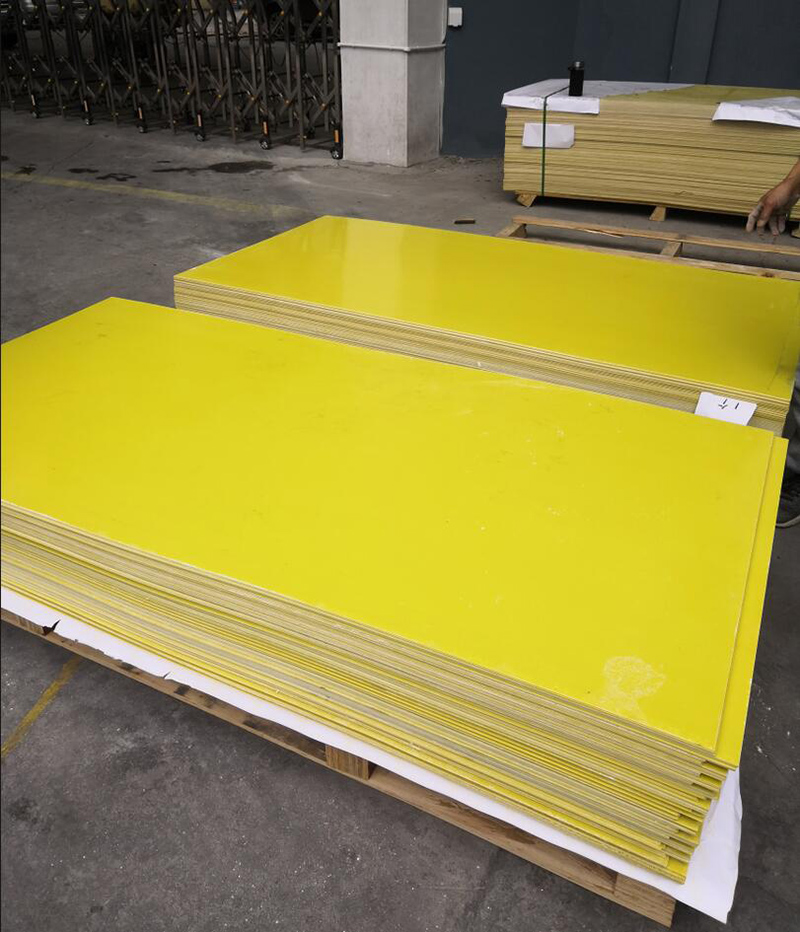
For cost-sensitive applications requiring flame retardancy, their UPGM203 polyester glass mat sheets provide UL 94 V-0 fire safety at a material cost significantly lower than premium epoxy laminates. The glass mat reinforcement structure retains stable electrical properties under high humidity conditions—a critical advantage over paper-based phenolic materials in unsealed industrial environments. With arc resistance exceeding 180 seconds and CTI ratings above 600V, these sheets meet the insulation coordination requirements of low-voltage switchgear partitions specified in IEC 61439 standards.
The company’s technical team provides custom CNC fabrication services that transform raw insulation sheets into finished partition panels with precision cutouts, mounting holes, and edge finishing. This integrated manufacturing approach eliminates the quality risks associated with field cutting of electrical insulation materials, where improper machining can introduce delamination or micro-cracks that compromise dielectric strength.
Conclusion: Engineering-Driven Material Specification
The specification of industrial insulation sheets for construction partitions demands a systematic evaluation of electrical, thermal, mechanical, and chemical performance requirements. As industrial facilities face increasingly stringent safety regulations and operational demands, the material science behind modern composite insulation sheets provides engineered solutions that outperform traditional building materials. By understanding the technical distinctions between epoxy-glass, phenolic, and polyester-glass mat systems, construction professionals can optimize partition designs for long-term reliability while meeting project budget constraints and compliance standards.
https://www.xyhplastic.com
Shenzhen XiongYiHua Plastic Insulation LTD. -
AuthorPosts

- You must be logged in to reply to this topic.